
Self-retracting lifelines that keep the line taut as you move and lock on a fall, cutting fall distance to a fraction of what a lanyard allows. Web and cable, sealed and edge-rated options.
 ASAT
ASAT
 ASAT
ASAT
 ASAT
ASAT
 ASAT
ASAT
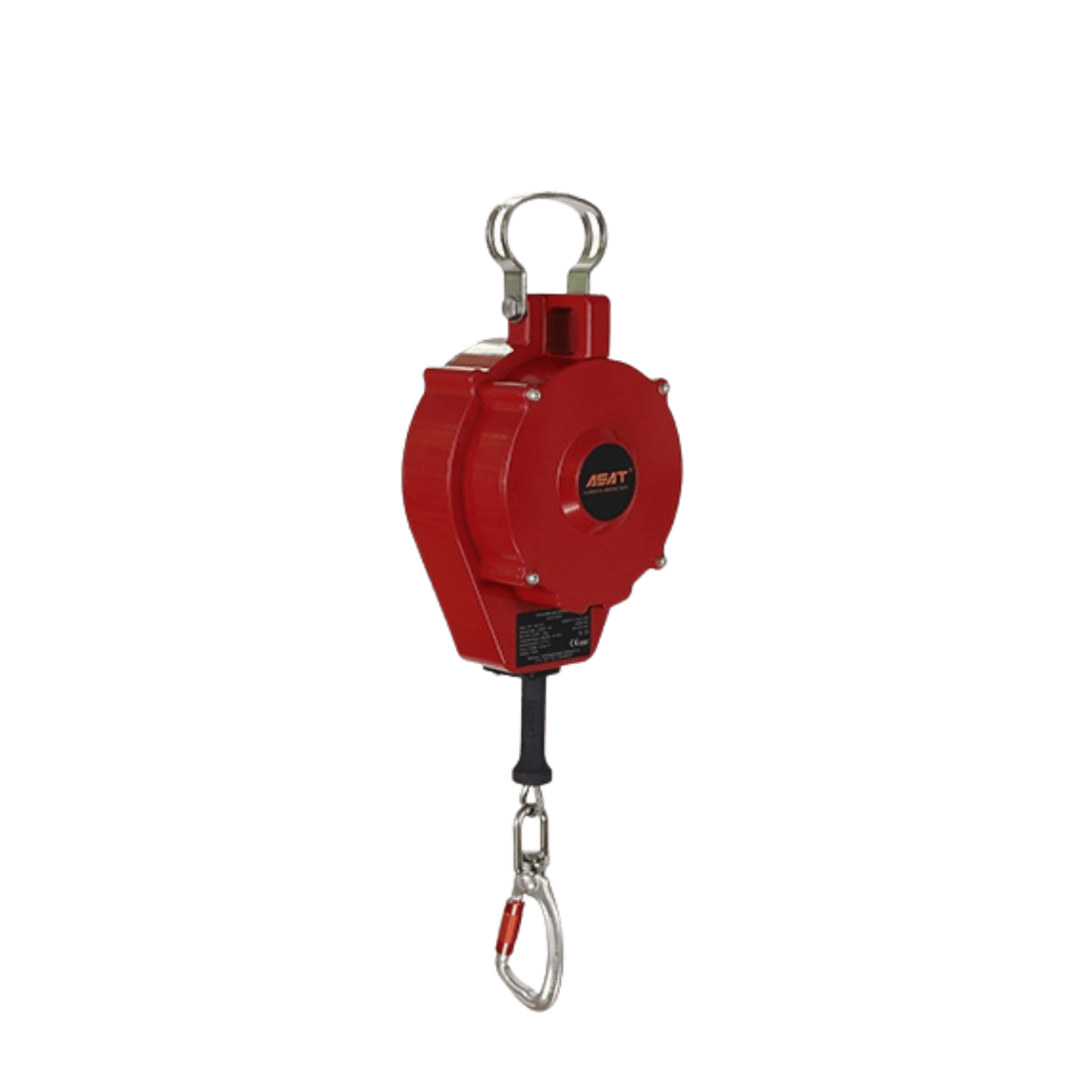
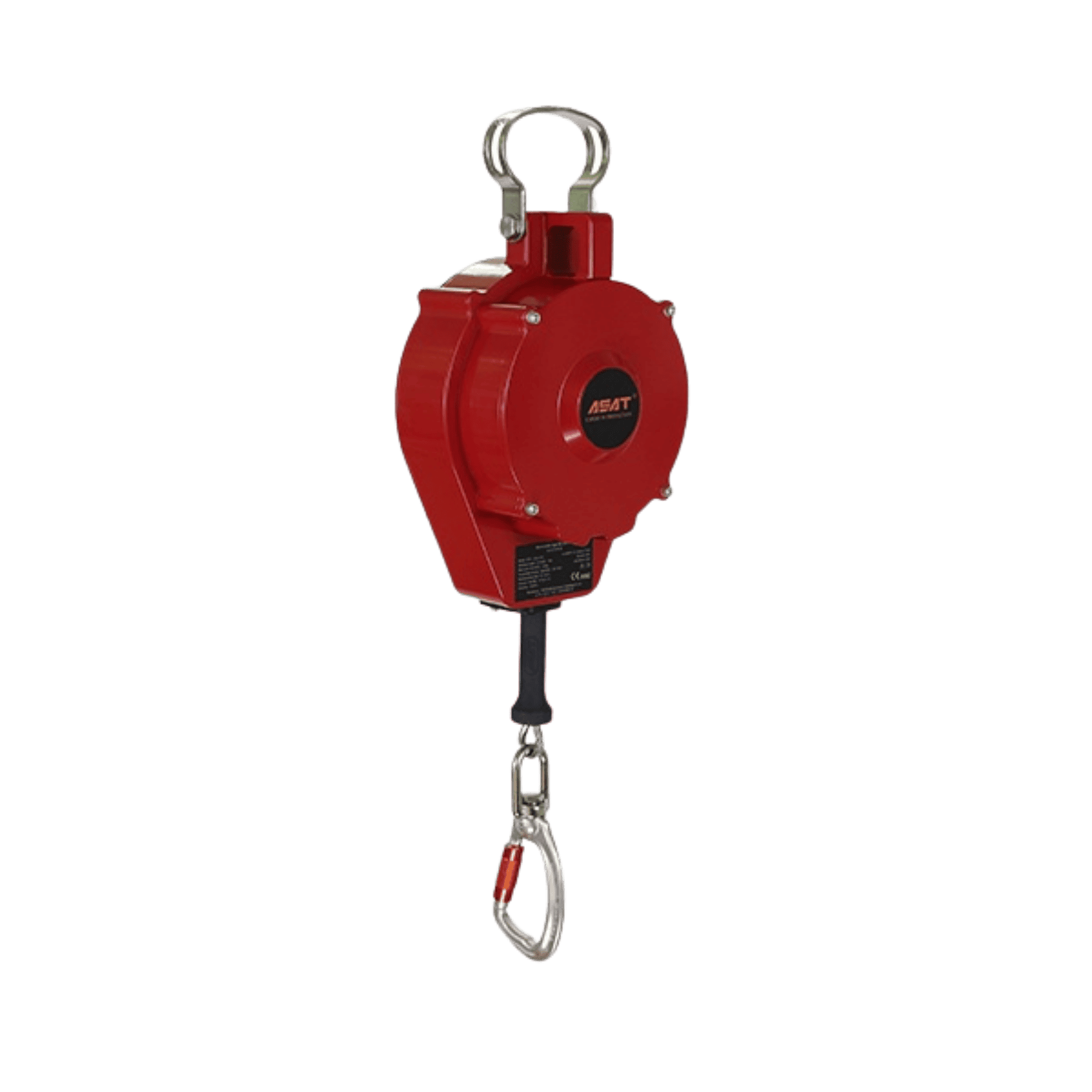
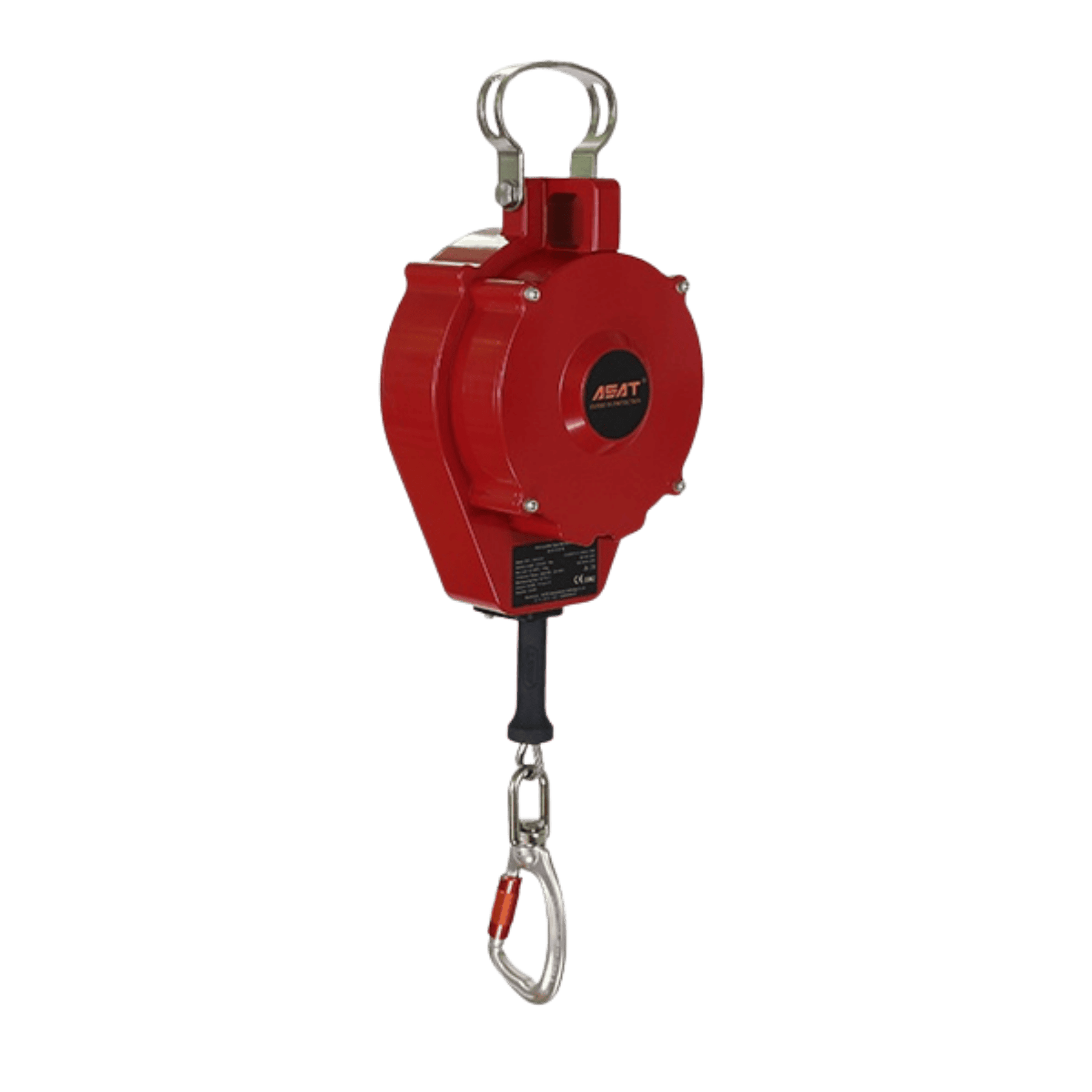
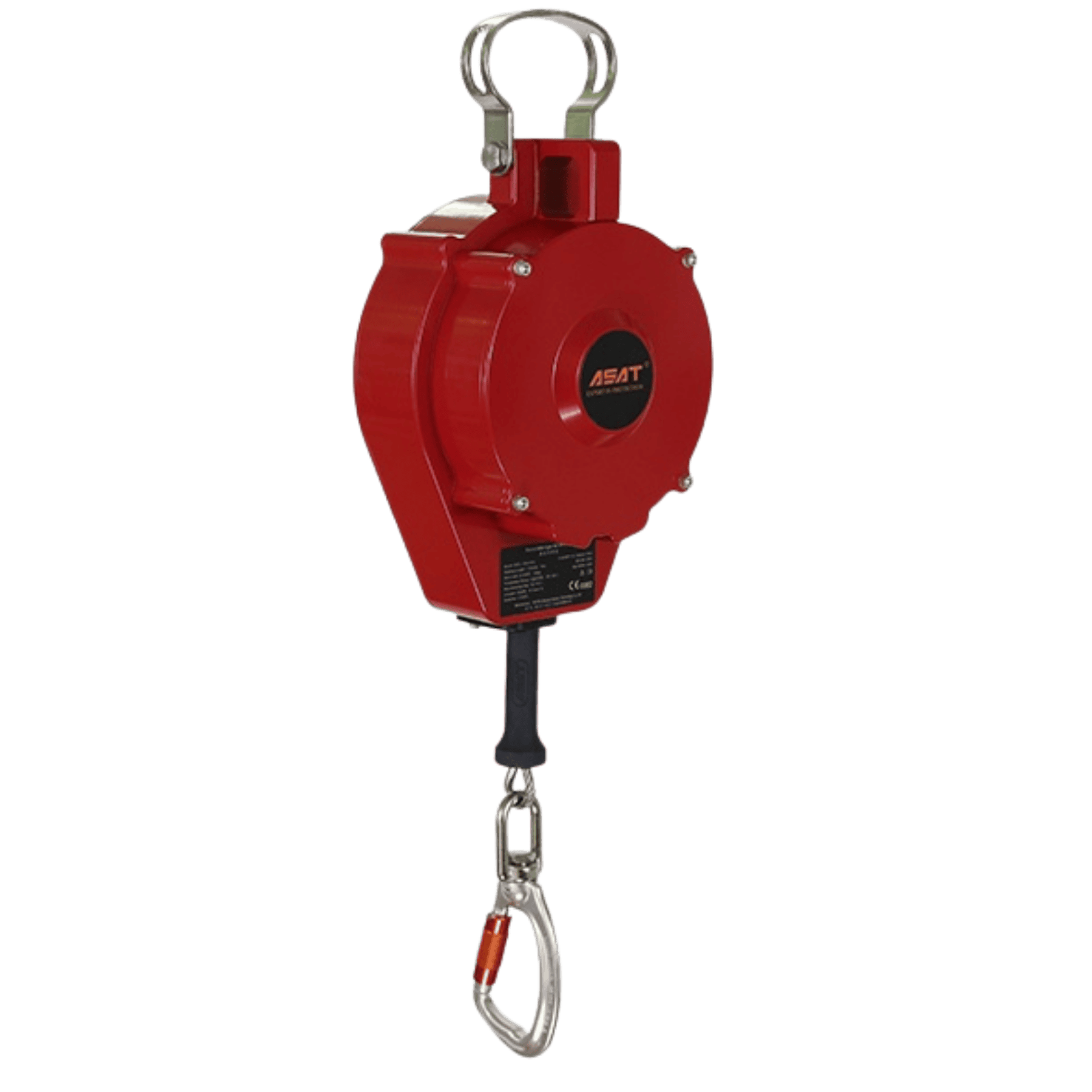
Sealed self-retracting lifelines across a range of working lengths, so the unit can be matched to the height actually being worked rather than buying long and living with the weight. Sealed housings are the specification we carry because the mechanism is the part that fails when water, dust and grit get in, and that is most environments our customers work in.
Tell us the working height, where the anchor will sit relative to the worker, and whether the line will pass over an edge. Those three answers decide the unit — and the second one decides whether a standard overhead unit is even permitted.
A self-retracting lifeline pays line out as the worker moves and takes it back in as they return, so there is no slack to fall through. When it senses a fall, an internal brake locks the drum and arrests it over a short distance.
The practical consequence is clearance. A shock-absorbing lanyard needs several metres below the anchor before the fall is arrested, which rules it out wherever the ground, a floor or an obstruction sits closer than that. An SRL brings that requirement down sharply, which is why it is standard on structures where a lanyard simply would not fit the space available.
In the UK and much of Europe the same device is often called a fall arrest block or retractable type fall arrester. The terms describe the same equipment.
Webbing SRLs are lighter and easier to handle, and suit shorter working lengths and general construction use. Galvanised or stainless cable units take longer lengths and stand up better to abrasion, heat and dirty environments.
Sealed units close the mechanism against water, dust and contaminants. They earn their place in wind, marine, wastewater and any environment where a unit will otherwise be serviced constantly — the sealing is about keeping the brake mechanism clean, not just the housing.
Most SRLs are designed to be anchored overhead. Anchoring at or below foot level changes the geometry of the fall entirely: the free fall is longer before the brake engages, and the line may be dragged across the structure's edge. Units rated for that use are built and tested differently, and ANSI Z359.14 separates them for exactly this reason: a Class 1 device is for anchorage at or above the dorsal attachment, a Class 2 device is tested for anchorage down to foot level and for leading edge use. The 2021 revision renamed these — what was sold as an SRL-LE is now a Class 2.
Working to one side of the anchor introduces a swing fall — the worker pendulums back toward the anchor line and may strike the structure on the way. That risk is managed by anchor placement, not by the device, and it is the reason SRL positioning is planned rather than improvised.
EN 360 is the European standard for retractable type fall arresters. In North America, ANSI Z359.14 covers self-retracting devices and distinguishes between units intended for overhead anchorage and those rated for foot-level tie-off and leading edge use.
Whether a specific unit is rated for edge use, for foot-level anchoring, or for a given worker weight range is stated in its instructions and on its label. Read it there. The category tells you what kind of device this is; only the product documentation tells you what that device is approved to do.
SRLs are inspected before each use, with attention to the line, the hooks, the housing and the retraction and locking action. A unit that does not retract cleanly or does not lock under a sharp pull is withdrawn immediately.
Beyond that, most manufacturers specify periodic inspection by a competent person and, for many models, factory recertification at a stated interval. Those intervals differ between manufacturers, so plan them from the documentation for the units you actually own rather than from a general rule.
An SRL keeps the line taut and locks within a short distance of a fall, while a shock-absorbing lanyard allows free fall before its energy absorber deploys. The difference shows up as required clearance below the worker: an SRL needs considerably less, which makes it the option where the ground or an obstruction is close.
Only if the specific unit is rated for it. Anchoring at or below foot level lengthens the free fall before the brake engages and can drag the line over an edge. Devices approved for foot-level tie-off and leading edge use are built and tested for that case and are labelled accordingly; a standard overhead-anchor unit is not.
It is the British and wider European term for a self-retracting lifeline, also called a retractable type fall arrester. The device is the same: a housing containing a retracting line that locks when a fall is detected.
Before every use by the user, and periodically by a competent person at an interval set by the regulations you work under and by the manufacturer. Many models also require factory recertification at a stated interval. Those intervals vary by manufacturer, so take them from the documentation supplied with the unit.