
Locking carabiners and connectors for rope access and fall protection: screwgate, twist-lock and triple-action, in steel and aluminium, with large-gate options for structural anchors.
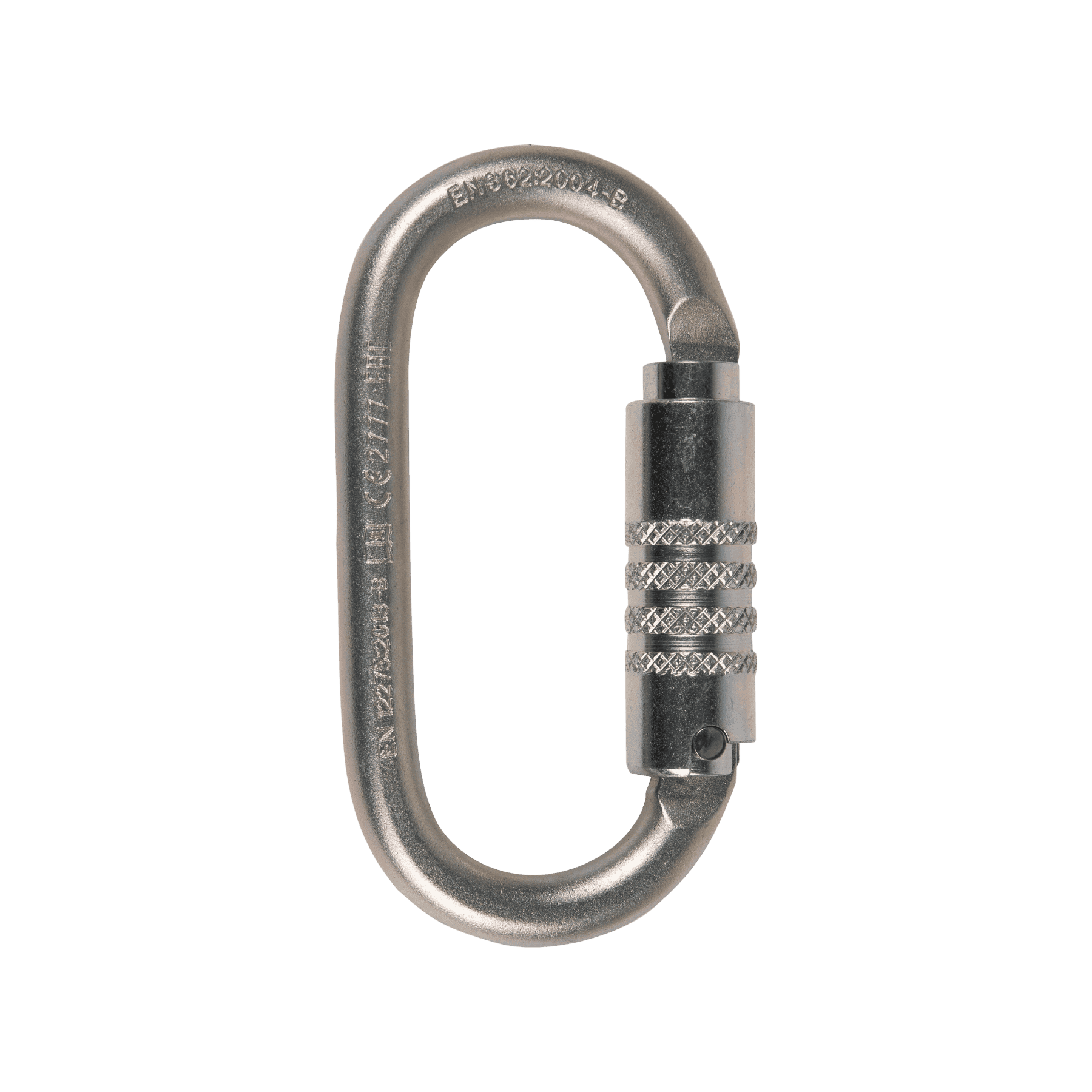 CAMP
CAMP
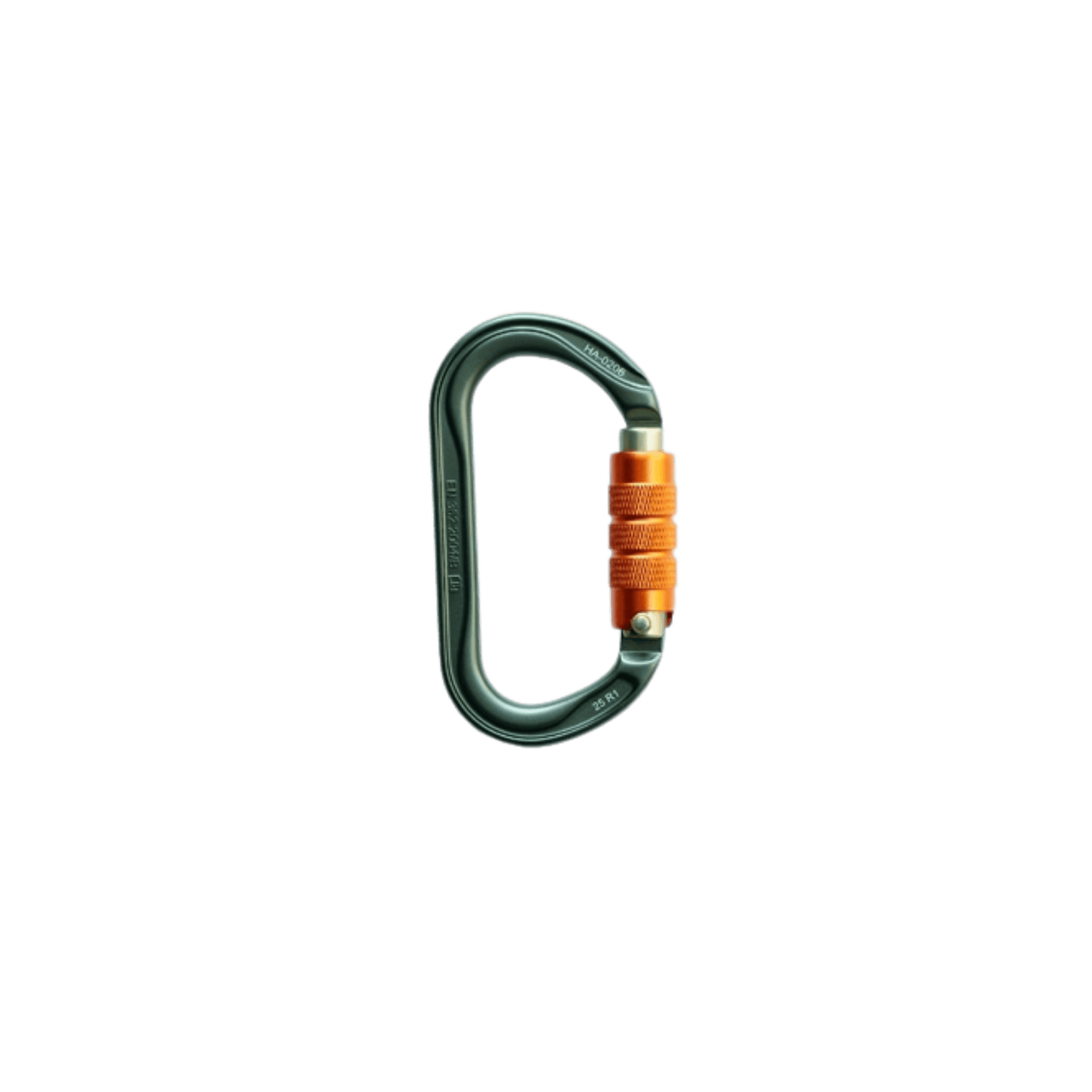 ASAT
ASAT
Aluminum auto-locking twist-lock carabiner (25 kN)
$10 USD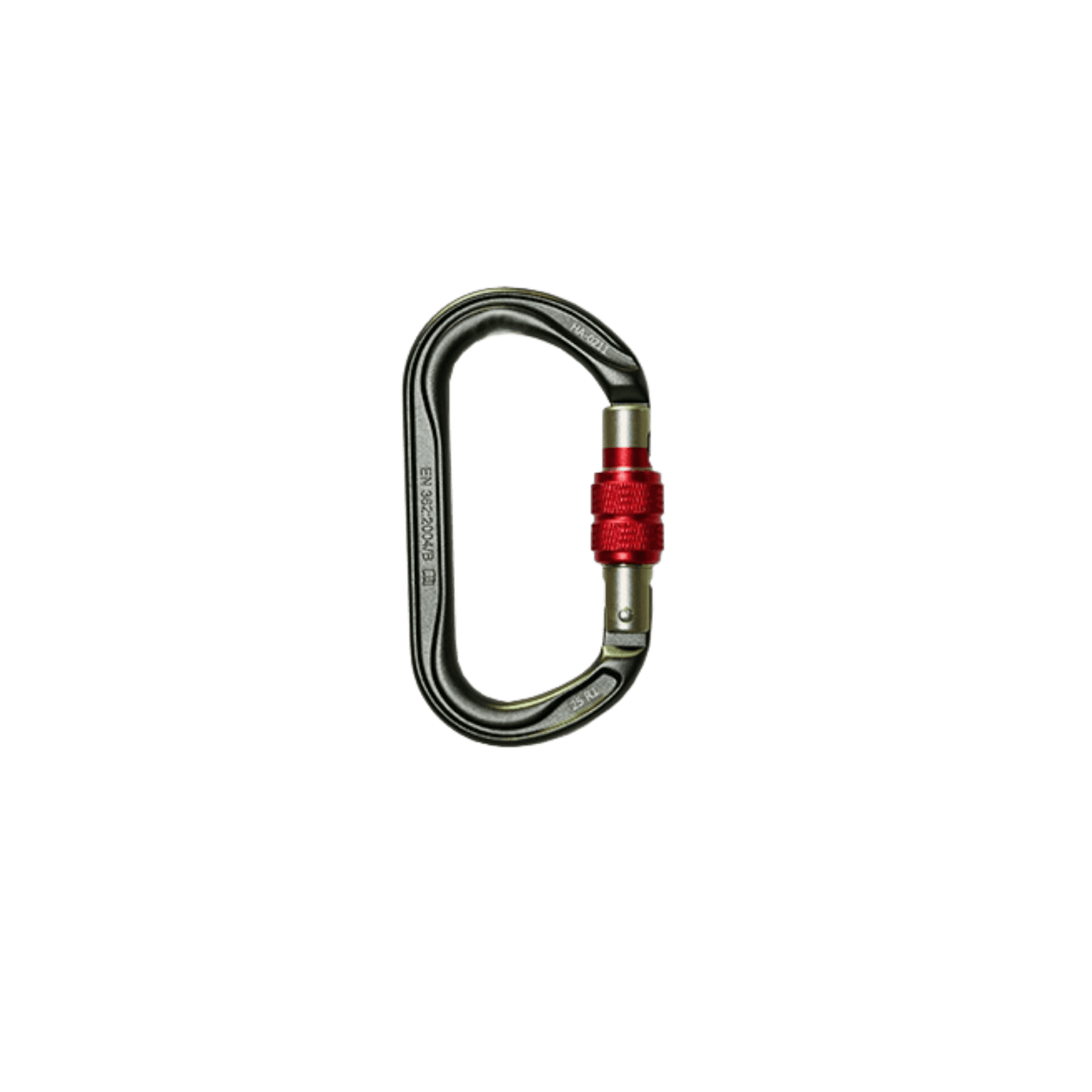 ASAT
ASAT
Aluminum manual screw-lock carabiner (25 kN)
$10 USD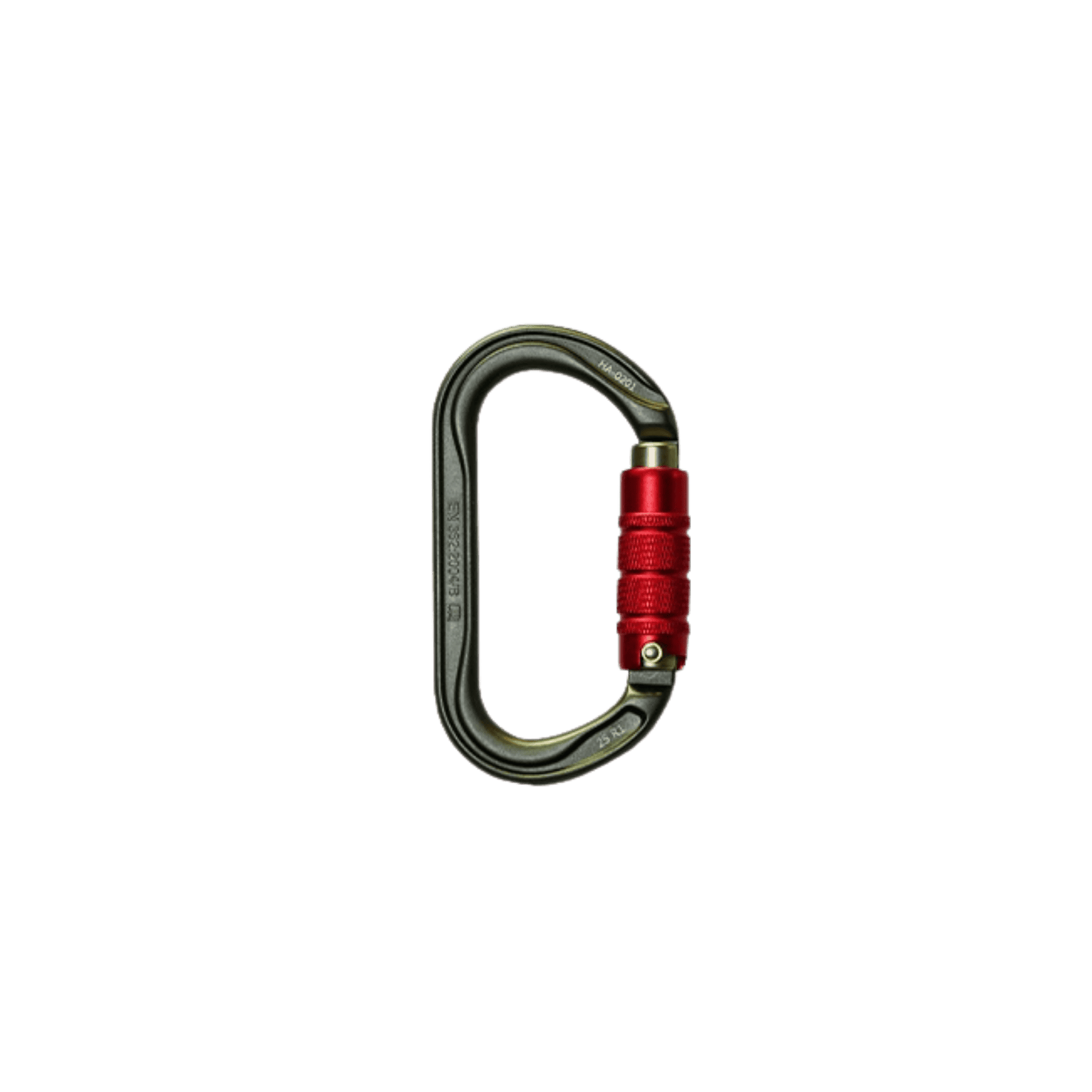 ASAT
ASAT
Aluminum auto-locking carabiner, Triact 3-stage (25 kN)
$10 USDLocking connectors across the actions and materials the work calls for: screw-lock, twist-lock and triact-lock in aluminium for what the technician carries all day, and screw-lock, twist-lock and auto-lock in steel for anchor connections and points that stay rigged. We also stock swivel connectors, oval steel connectors for pulley and device work, and large-gate steel connectors for structural anchors a standard karabiner will not fit around.
Buying connectors is mostly a question of quantity and fit. If you are equipping a team, send us the anchor points you actually work on — scaffold tube, structural steelwork, anchor rings — and we will make sure the gate openings match rather than arriving a size short.
A screwgate is locked by hand: the sleeve is threaded closed after clipping. It is simple and inspectable at a glance, but it depends on the user remembering, and vibration can back a sleeve off over a long shift.
Twist-lock and triple-action gates close themselves. A twist-lock needs two deliberate movements to open, a triple-action needs three — typically push, twist and open — which makes accidental opening against clothing, structure or rope very unlikely. That safety comes at the cost of one-handed speed, which is why many technicians carry both and use each where it fits.
Aluminium connectors are light, which matters when a technician carries twenty of them all day. They wear faster against steel structure and rope under repeated load.
Steel connectors are heavier and far more wear-resistant, which makes them the usual choice for permanent installations, anchor connections that stay rigged, and any point where the connector runs against structure. A common pattern is steel at the anchor and aluminium on the person.
A connector's rated strength is along its major axis, in line with the spine, with the gate closed. Loaded across the minor axis it is dramatically weaker, and weaker again with the gate held open.
What is marked on the connector depends on which standard it was certified to, and this catches people out. Climbing connectors to EN 12275 carry three figures — major axis, minor axis and gate open. EN 362, the standard for connectors in personal fall protection at work, tests with the gate closed, so an industrial connector may show only its major axis rating. Not seeing a gate-open figure does not mean the connector is stronger in that state; it means that state was not part of what it was certified for.
Cross-loading happens when a connector rotates in use and ends up loaded the wrong way across its width. Captive-eye connectors, correctly sized attachment points and connectors shaped to resist rotation all exist to prevent it. It is one of the few failure modes in this category that comes from how the connector sits rather than from what it is made of.
EN 362 covers connectors for personal fall protection, and classifies them by intended use — including class T for termination connectors and class A for anchor connectors. EN 12275 covers connectors for mountaineering, which is the recreational family. ANSI Z359.12 is the North American standard for connecting components.
Gate opening is the practical constraint people discover late. A connector has to physically fit the anchor it is going onto: structural steelwork, scaffold tube and large anchor rings all need a wide gate that a standard karabiner does not have. The connector carries its standards and its rated strengths marked on the spine — read them there rather than from a catalogue listing, and note which figures are present.
A screwgate is locked manually by threading its sleeve closed, so it depends on the user and can loosen with vibration. A triple-action gate locks itself and needs three deliberate movements to open, which makes accidental opening very unlikely. The trade-off is speed of one-handed use.
Aluminium is lighter and suits connectors carried on the person all day. Steel is heavier but far more wear-resistant, which suits anchor connections, permanent installations and any point where the connector runs against structure. Many teams use steel at the anchor and aluminium on the harness.
Cross-loading is when a connector rotates and ends up loaded across its minor axis instead of along its spine. Rated strength applies to the major axis with the gate closed; across the minor axis, or with the gate held open, a connector is dramatically weaker. Captive-eye designs and correctly sized attachment points prevent it. Note that EN 362 connectors are tested with the gate closed, so an industrial connector may not carry a gate-open figure at all — its absence is not a reassurance.
Connectors for personal fall protection at work are certified to EN 362, while mountaineering connectors are certified to EN 12275. They are different standards with different requirements, and equipment for work at height should carry the standard that covers that use. The markings on the connector spine state which applies.