
Full body harnesses for fall arrest, rope access and work positioning — from single-point harnesses for occasional access to fully equipped rope access and wind turbine models, plus work seats. Certified, warranty-backed, and priced for teams kitting out rather than replacing one.
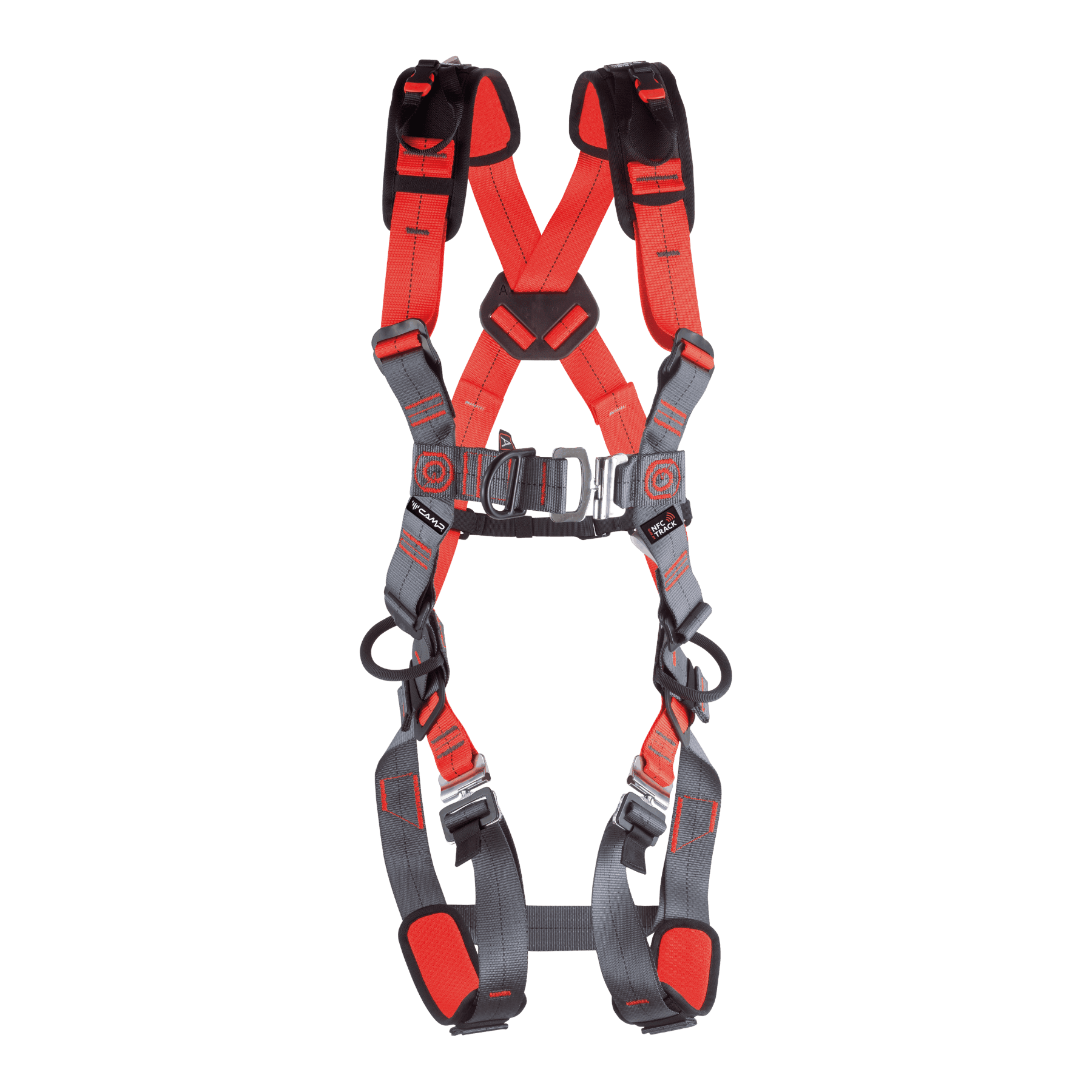 CAMP
CAMP
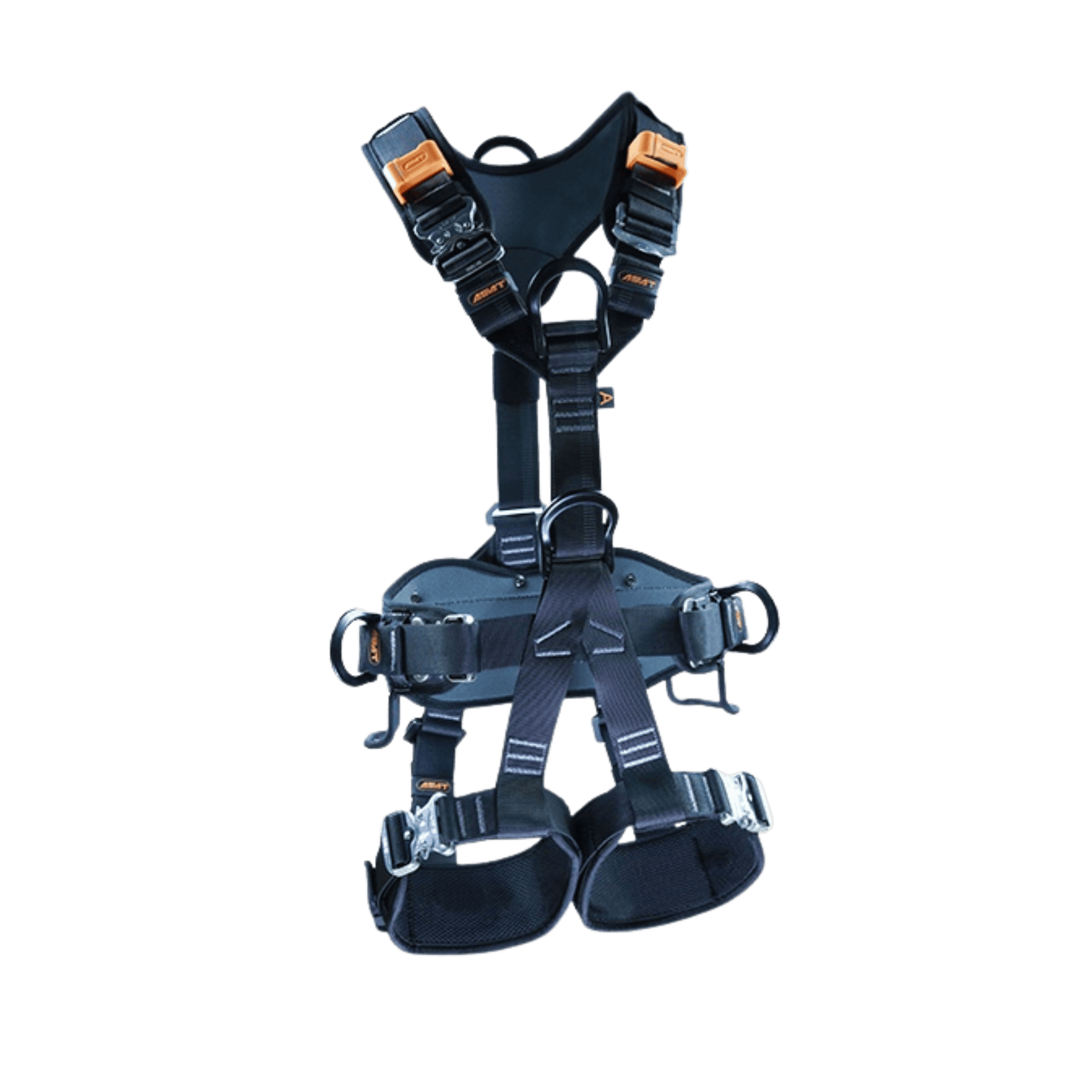 ASAT
ASAT
Comfort full-body harness for wind-power and industrial work (EN 361/358/813)
$205 USD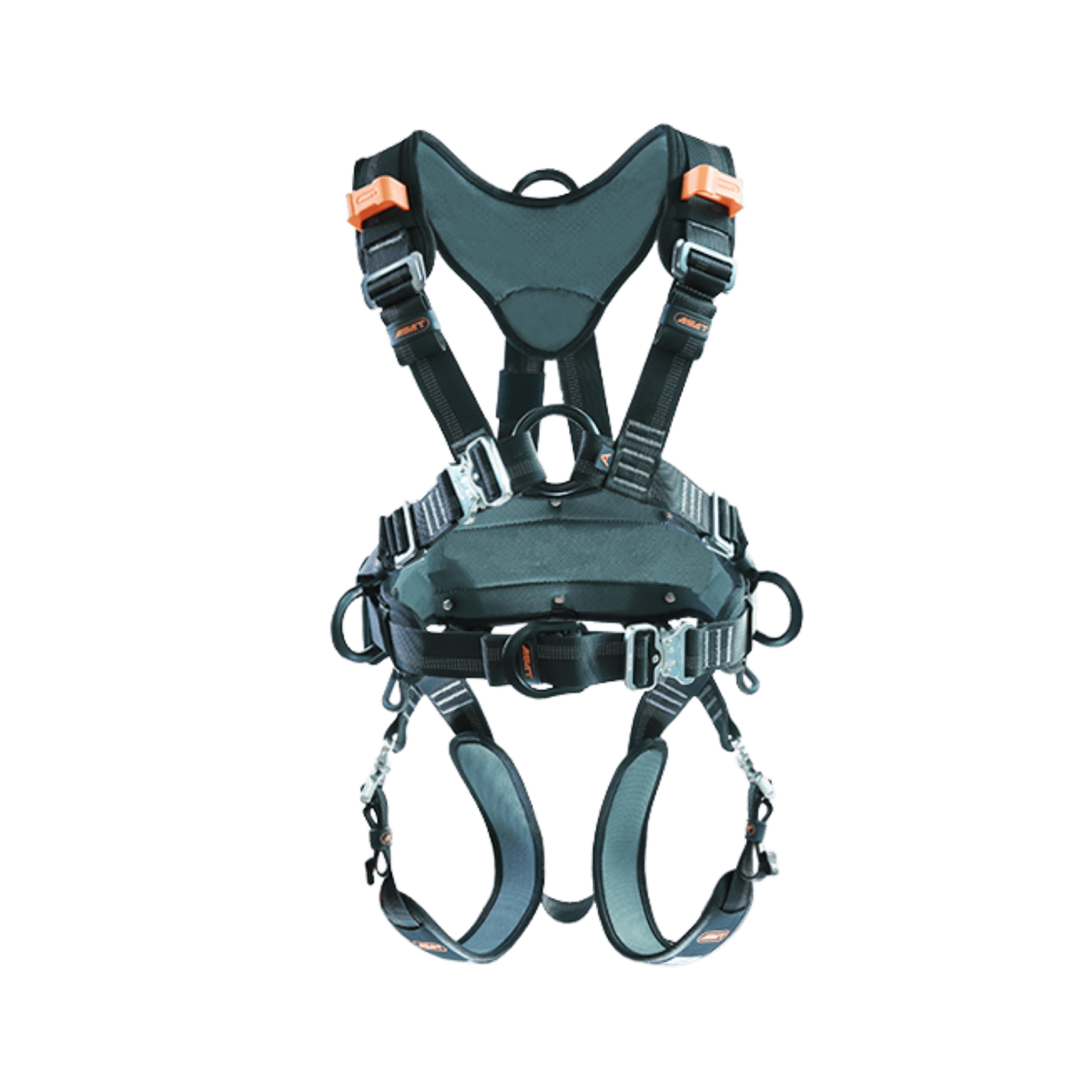 ASAT
ASAT
Comfort full-body harness for wind-power work - fall arrest + positioning (EN 361/358)
$180 USD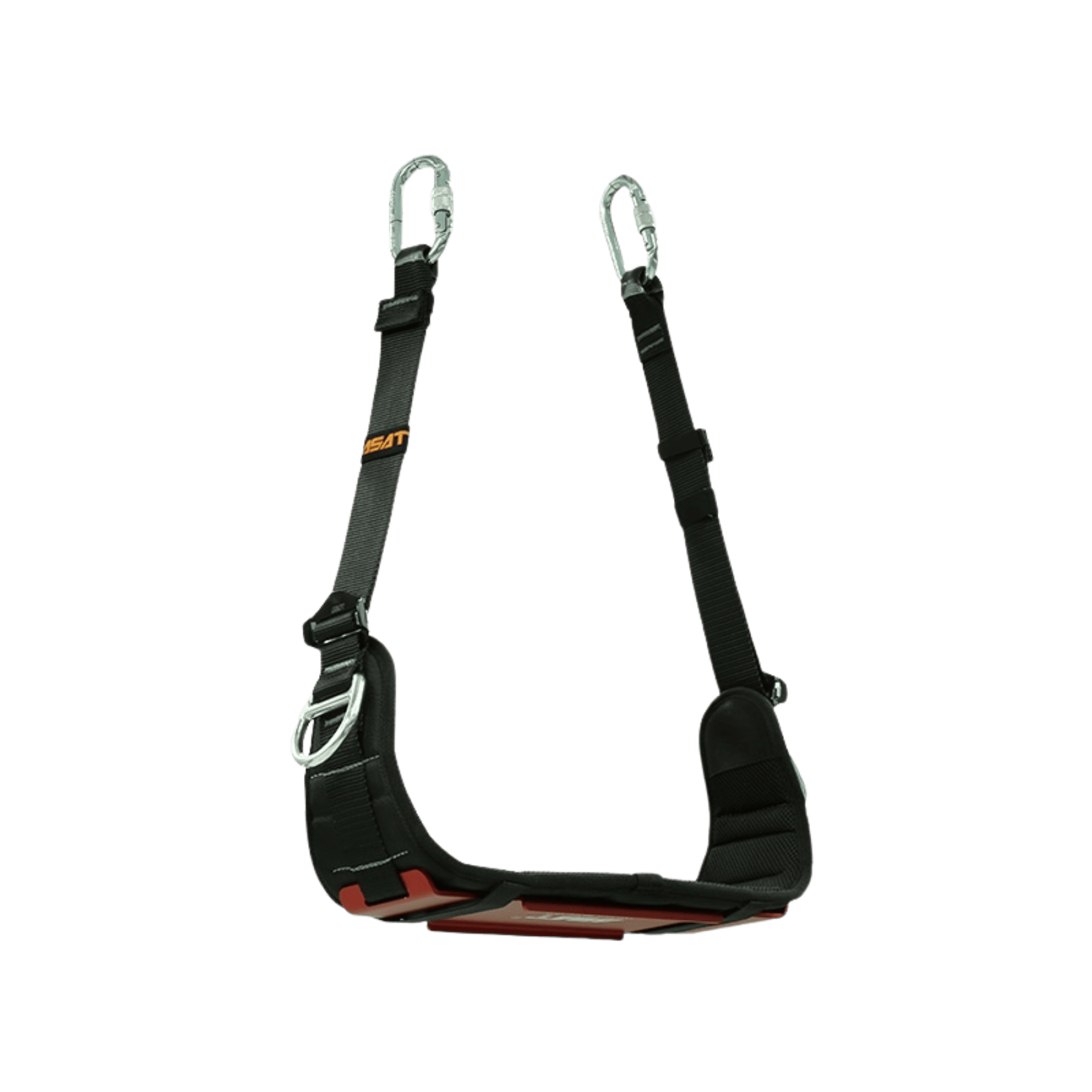 ASAT
ASAT
Suspension work seat — wide rigid seat, bilateral semi-rigid design for comfortable long suspension
$150 USD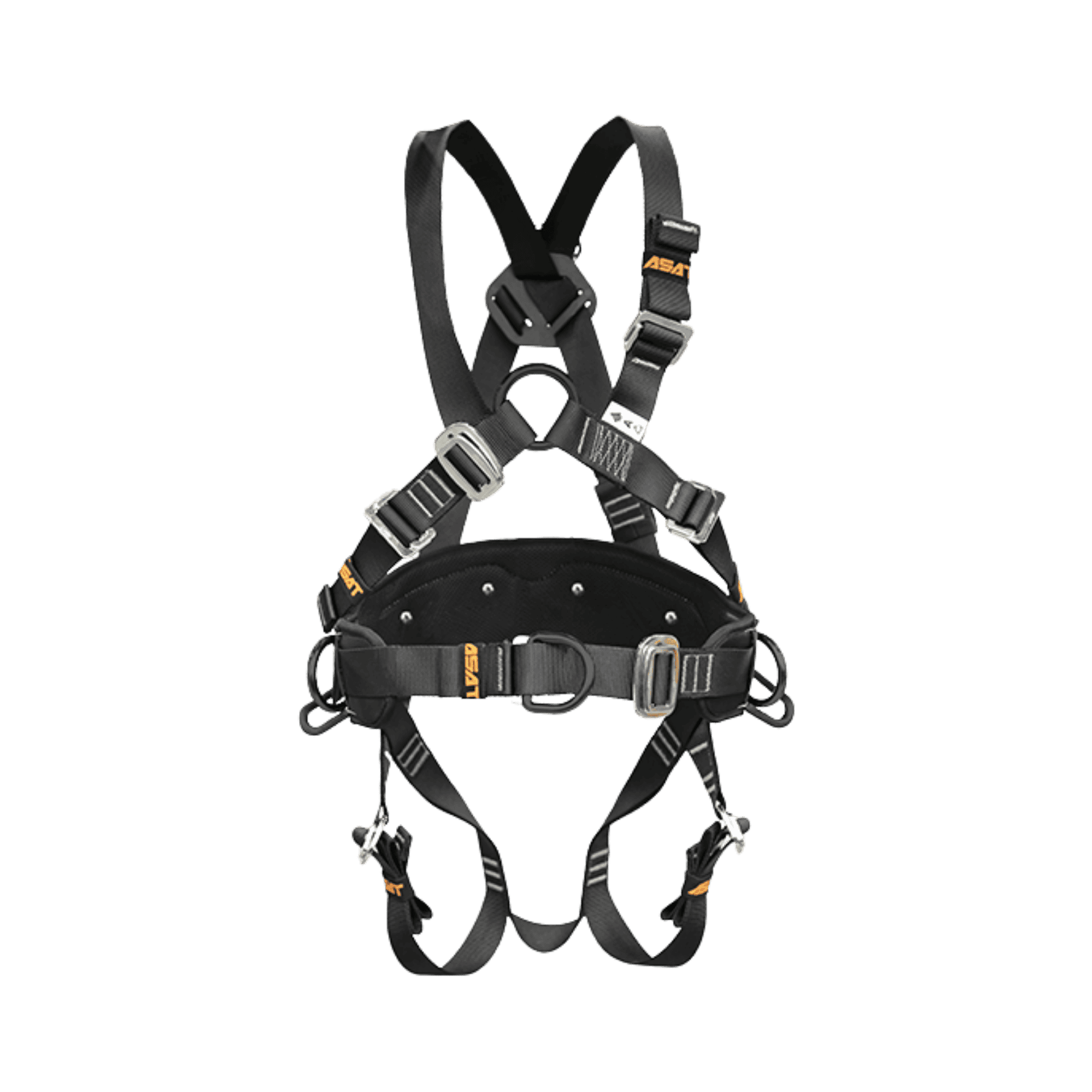 ASAT
ASAT
Full-body harness - fall arrest + work positioning (EN 361/358)
$180 USD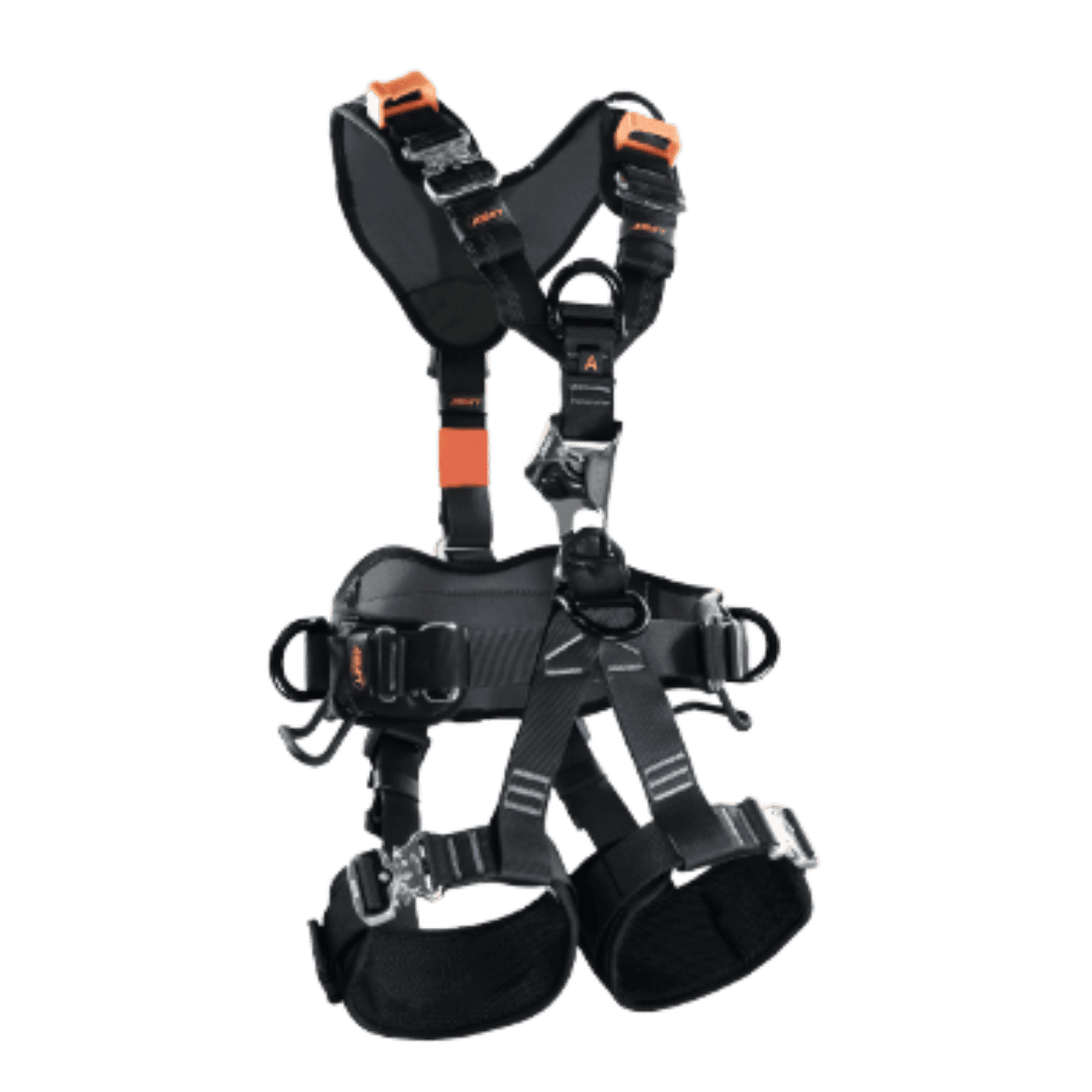 ASAT
ASAT
Rope access, suspension, work positioning & fall arrest harness
$210 USD Only 5 leftHarnesses are not interchangeable, and the fastest way to buy the wrong one is to shop on price alone. We stock across the range so the choice can be made on the work rather than on what happens to be available.
At the simpler end are harnesses with a single dorsal attachment, for workers who need fall arrest on a structure and are not suspended for long. Adding a sternal point suits ladder systems and guided-type arresters. Rope access models add a ventral attachment and lateral D-rings, so the technician can work suspended from the front and position themselves hands-free. Wind turbine harnesses are their own case, built around long periods sitting inside a tower. Work seats and seat boards sit alongside all of them for facade and long-duration suspended work.
Sizing runs across the range, and it is not a detail to settle later: a harness two sizes out does not hold the wearer where it was tested to hold them. If you are equipping a crew rather than an individual, tell us the work and the sizes and we will spec it.
A full body harness does two jobs, and buyers tend to shop for the first. It spreads the forces of a fall across the thighs, pelvis and shoulders rather than the abdomen — and it holds the wearer upright and comfortable while suspended, whether that is during work on rope or while waiting for a colleague.
The second job is what separates harnesses at similar price points. Attachment point position, leg strap geometry and back support decide how the harness carries a hanging body, which is why a model built for occasional ladder access feels very different from one built to work suspended all day.
Under EN 361 both the dorsal point between the shoulder blades and the sternal point at chest height are fall arrest attachments; a harness marks each one with a capital A. Neither is a default. Which you use follows the work: dorsal keeps the line behind and out of the way, and suits an anchor overhead; sternal keeps it in front, and is the usual connection for guided-type arresters, ladder systems and rope access back-up devices.
Suspension position is the tiebreaker. Hanging from a dorsal point pitches the body forward, which is uncomfortable and awkward for a colleague to reach; a sternal connection holds the wearer upright and accessible. That is why rope access generally attaches the back-up device at the sternal point, and why harnesses built for rope access put a substantial attachment there.
Ventral attachment at the waist is the rope access working position, taking the wearer's weight through the descender in normal use. It is not a fall arrest point, and a load carried on the back or hips can invert someone suspended from it. Lateral D-rings at the hips are for work positioning only — leaning back into the harness to keep hands free — and must never be used to arrest a fall.
These points are not interchangeable because a connector happens to fit. Each has a function defined by the harness instructions and by the system it is part of, and that document is what settles it for the harness in your hands.
In Europe, EN 361 covers full body harnesses for fall arrest, EN 358 covers work positioning belts, EN 813 covers sit harnesses for rope access, and EN 1497 covers rescue harnesses. In North America, ANSI/ASSP Z359.11 is the equivalent standard for full body harnesses. A single harness often carries several of these because it is designed for more than one use.
In the United States the distinction that matters most is between a standard and a regulation. ANSI standards are voluntary consensus documents; OSHA is law. OSHA 1926 Subpart M covers fall protection in construction and 1910.140 covers it in general industry, and both set what the system must achieve rather than which harness to buy: a personal fall arrest system must limit arresting force to 1,800 lbf on a body harness, allow no more than 6 ft of free fall and no contact with a lower level, stop the fall within 3.5 ft of deceleration distance, and hang from an anchorage rated at 5,000 lbf per worker — or one designed by a qualified person to a safety factor of at least two.
Two consequences follow for buying. A body belt cannot be used for fall arrest under OSHA; it is a positioning device only. And a harness marked to ANSI Z359.11 is not by itself proof that the system it is part of meets OSHA — the anchorage, the connecting means and the clearance below all sit inside that arithmetic.
Which of them a given harness meets is stated on its label and in its declaration of conformity — not by its category. Check that document before specifying a harness for a job, and check that the standard covers the use you have in mind, not just the product type.
Start with how long the wearer will be suspended. A harness used for a few minutes of ladder access and one used for six hours on a facade are judged by different criteria: the second needs a proper seat, padded thighs and a load-bearing waist belt, and the first probably does not.
Then account for what is carried. Technicians who hang tools from the harness need gear loops rated for that and a waist structure that stays in place under load. Wind turbine work adds its own demands, since the wearer sits in the harness inside a tower for long periods and needs both rear and front attachment.
Fit matters more than any feature list. A harness adjusted correctly on the right size will arrest a fall as designed; the same model two sizes out will not hold the wearer in the intended position afterwards.
Harnesses are inspected before each use by the wearer and periodically by a competent person, with the interval and the record-keeping set by the regulations you work under and by the manufacturer's instructions. Webbing cuts, chemical exposure, heat damage, deformed hardware and any harness that has arrested a fall are all reasons to withdraw it from service.
Service life is stated by the manufacturer and is not a fixed number across the industry. Read it from the product documentation for the model you own.
A full body harness distributes fall forces across the thighs, pelvis and shoulders and keeps the wearer upright after arrest, which is why it is the type required for fall arrest. A sit harness supports the wearer at the waist and thighs for working in suspension but does not on its own provide upper body support during a fall. Rope access work commonly uses a harness that combines both functions.
Either the dorsal point between the shoulder blades or the sternal point at chest height: under EN 361 both are fall arrest attachments, each marked with a capital A. The choice follows the work rather than one being standard. Dorsal keeps the line behind you and suits an overhead anchor. Sternal keeps it in front, is the usual connection for guided-type arresters and ladder systems, and is what rope access work generally uses for the back-up device — partly because a person suspended from a dorsal point is pushed forward with the abdomen and airway compressed, while a sternal connection holds them more upright. The ventral point at the waist is not a fall arrest attachment; it carries your weight while working on rope. Lateral D-rings at the hips are work positioning only. The harness instructions state which points on that harness are rated for which use.
No. A harness that has arrested a fall must be withdrawn from service, along with the rest of the system that took the load. Damage from a fall is not always visible, and the harness has already absorbed the energy it was designed to absorb once.
Hanging still in a harness restricts circulation in the legs, and how long that stays comfortable comes down to fit. Leg straps that sit correctly and spread load across the thigh buy time; narrow straps that dig in do the opposite. For work that involves real suspension rather than occasional access, look for padded and independently adjustable leg straps, a load-bearing waist belt, a proper seat or work seat compatibility, and suspension relief straps — short webbing loops the wearer can stand in to take pressure off. Getting the size right matters as much as the feature list.