
Manual and auto-locking descenders for controlled lowering in rope access, work positioning and rescue. Single and twin-line devices, with anti-panic options.
 ASAT
ASAT
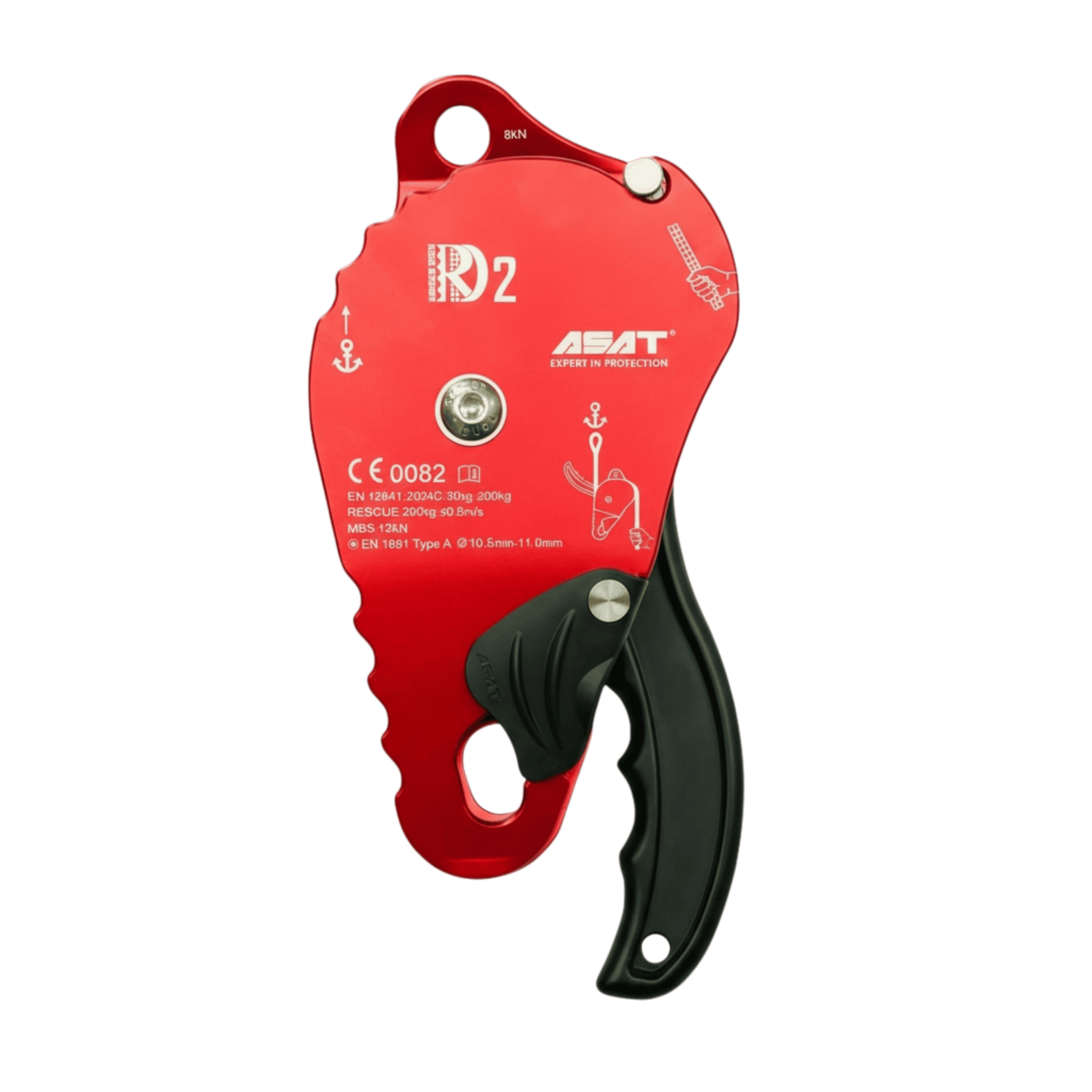
Self-braking descender with integrated high-efficiency pulley
$350 USD Only 5 left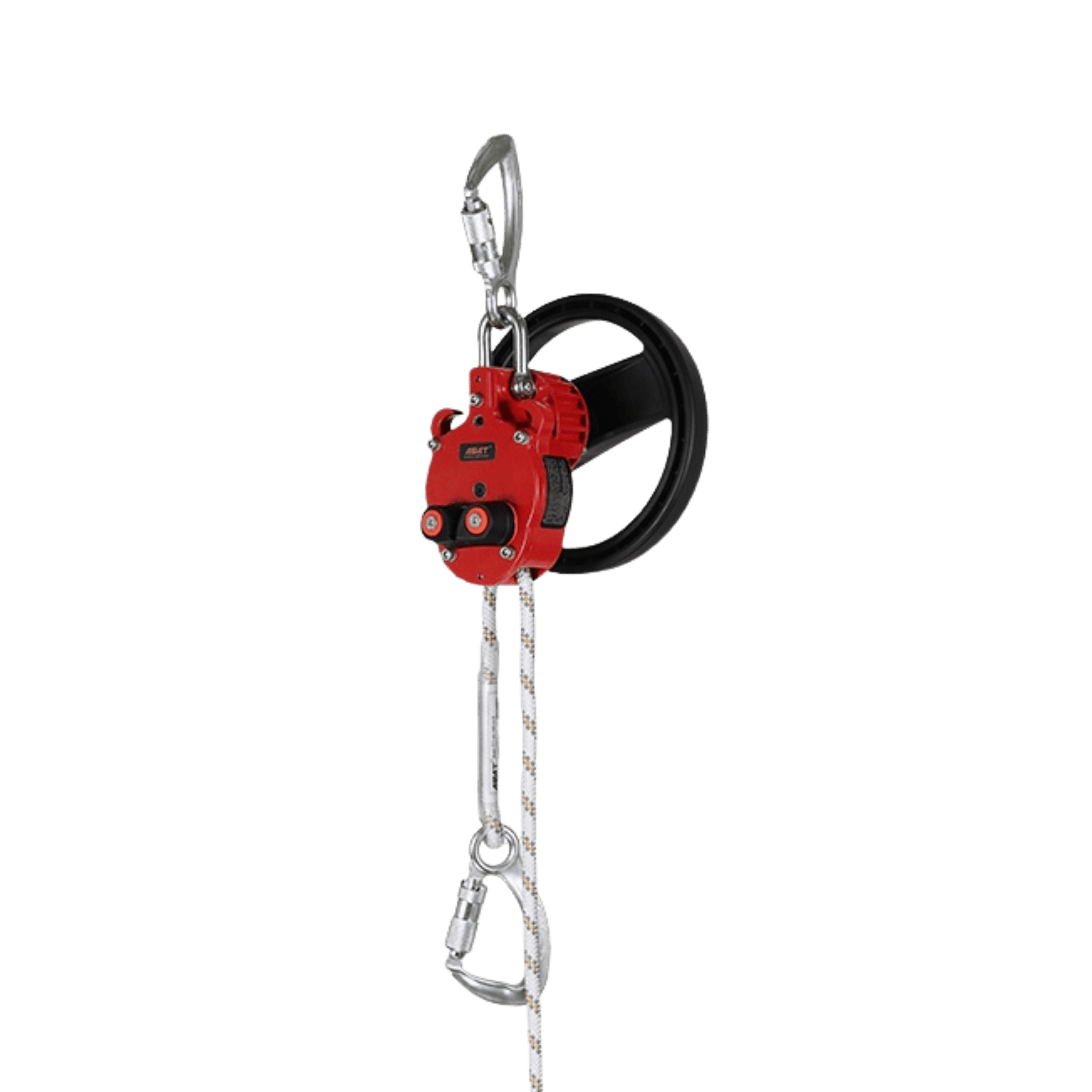 ASAT
ASAT
 ASAT
ASAT
A focused range rather than a wall of options: a rope access descender for daily work on the line, and automatic and rescue descent devices for controlled lowering where the user may not be the one operating it. Between them they cover the two jobs this category is bought for — working from rope, and getting someone down.
If you are matching a descender to rope you already own, or to a back-up device already in the kit, send us the rope diameter and the devices it has to work alongside. Compatibility is the part that goes wrong when this is bought on price.
A descender takes the worker's weight on the working line and lets them control the rate of descent by hand. Beyond that, an industrial device is expected to hold hands-free when released, so the technician can stop at a work position and use both hands without rigging a separate stop.
That is the line between an industrial descender and a climbing belay device. Recreational devices are built for a belayer standing on the ground managing a climber's rope; an industrial descender is built for a person hanging on it for hours, holding position and descending under load. They are not interchangeable, and the standards that govern them are different.
Anti-panic function locks the device when the handle is pulled too far, which is the instinctive reaction when a descent runs faster than expected. It exists because the natural human response to speed is to grip harder, and on a device without it that grip opens the descent further.
Hands-free hold is the other half. A device that stays locked when the handle is released turns the descender into a work positioning tool rather than only a means of getting down. Which functions a given device has, and how they behave under different loads and rope diameters, is specified per model — read it from the instructions before assuming.
EN 12841 Type C covers rope adjustment devices used as descenders on the working line in rope access systems. EN 341 covers descender devices for rescue, where the device is used to lower a person. EN 15151 covers braking devices for climbing, which is the recreational family.
Rescue carries its own certification, and it is a separate question from rope access. In the United States, life safety rope equipment for emergency services is covered by NFPA 2500, which absorbed NFPA 1983 in 2022 — a descent control device certified to it is classified by intended duty, and equipment still carrying the NFPA 1983 stamp remains serviceable. ANSI/ASSP Z359.4 covers assisted-rescue and self-rescue systems. A device fit for daily rope access work is not automatically certified for rescue use.
A single device often carries more than one of these, and the rope diameters it is certified with are part of the certification, not a suggestion. Check both the standard and the approved rope range in the declaration of conformity for the model you are specifying.
Descenders are certified for a range of rope diameters, and behaviour changes across that range: a rope at the thin end runs faster and grips less, a rope at the thick end feeds stiffly. Using a rope outside the stated range is not a matter of preference, it is outside the tested conditions.
Rope condition matters too. A dirty, stiff or glazed rope behaves differently through the same device than a new one, which is one reason rope inspection and descender selection are treated as a single decision rather than two.
A descender is designed for a person to descend under their own weight and to hold position hands-free, which is what rope access and rescue work require. A belay device is designed for a belayer to manage a climbing partner's rope from a stance. They are governed by different standards, and a recreational belay device is not a substitute for an industrial descender.
It means the device locks if the control handle is pulled beyond its normal range, rather than releasing further. The function exists because the instinctive reaction to descending too fast is to grip harder, which on a device without anti-panic opens the descent instead of stopping it.
In Europe, EN 12841 Type C covers descenders used on the working line of a rope access system, and EN 341 covers descender devices used for rescue lowering. In the United States, rescue equipment for emergency services falls under NFPA 2500, which absorbed NFPA 1983, and ANSI/ASSP Z359.4 covers assisted-rescue systems. A device may be certified to several of these, and being certified for rope access work does not make it certified for rescue. The rope diameters it is approved for are part of that certification and are stated in the instructions.
No. Each device is certified with a stated range of rope diameters and types, and it is tested only within that range. A rope outside it may run faster, grip less or feed poorly. The approved range is given in the product documentation.