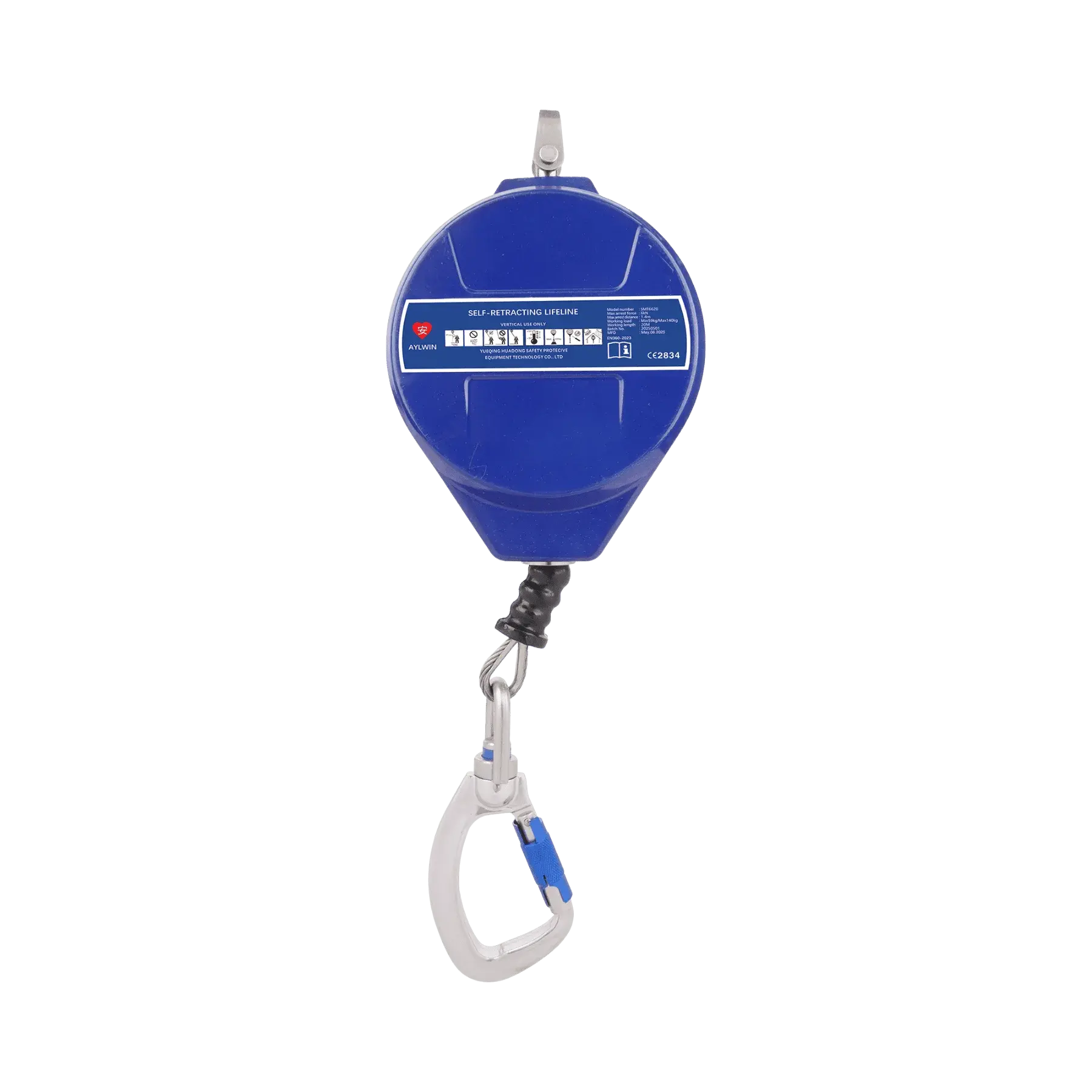
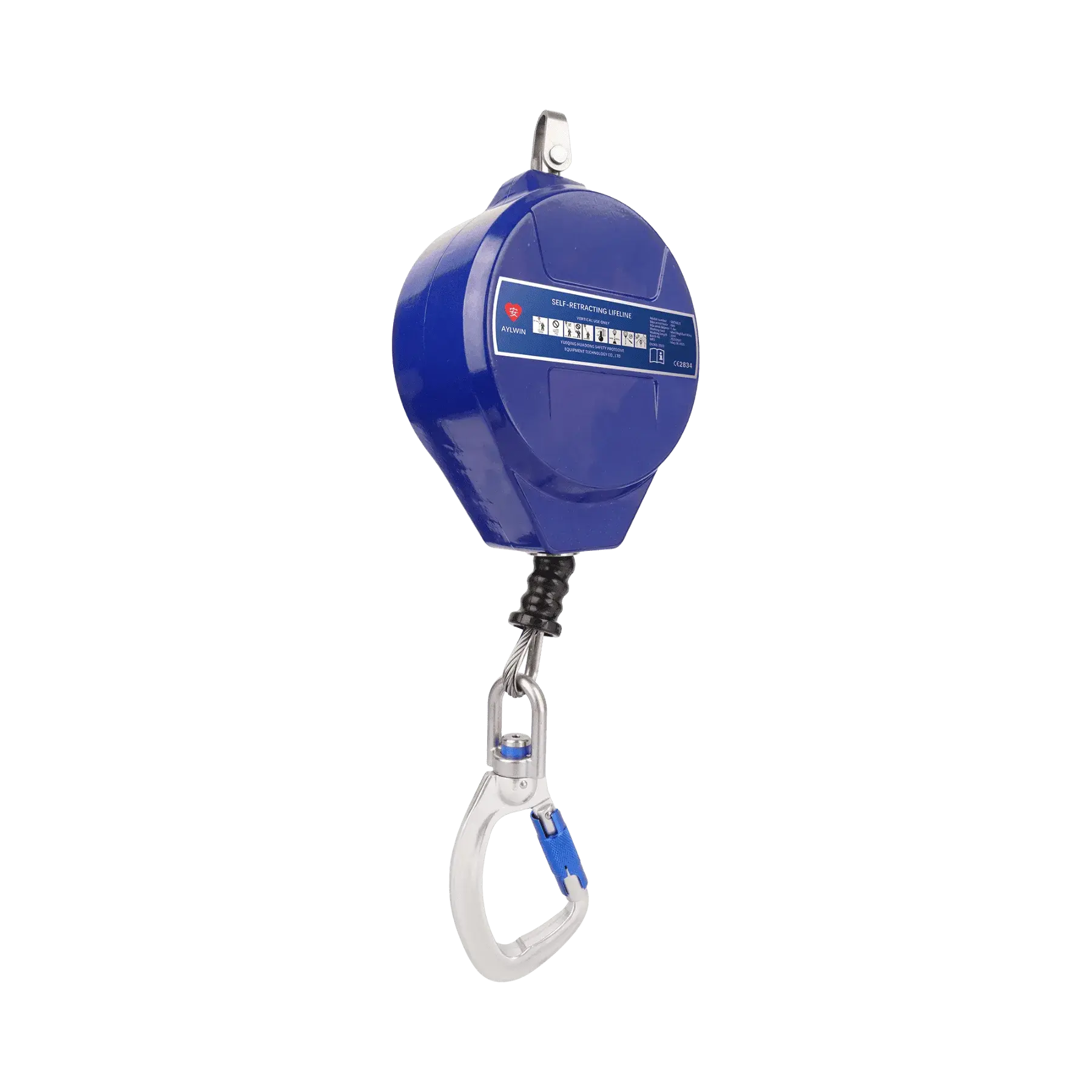
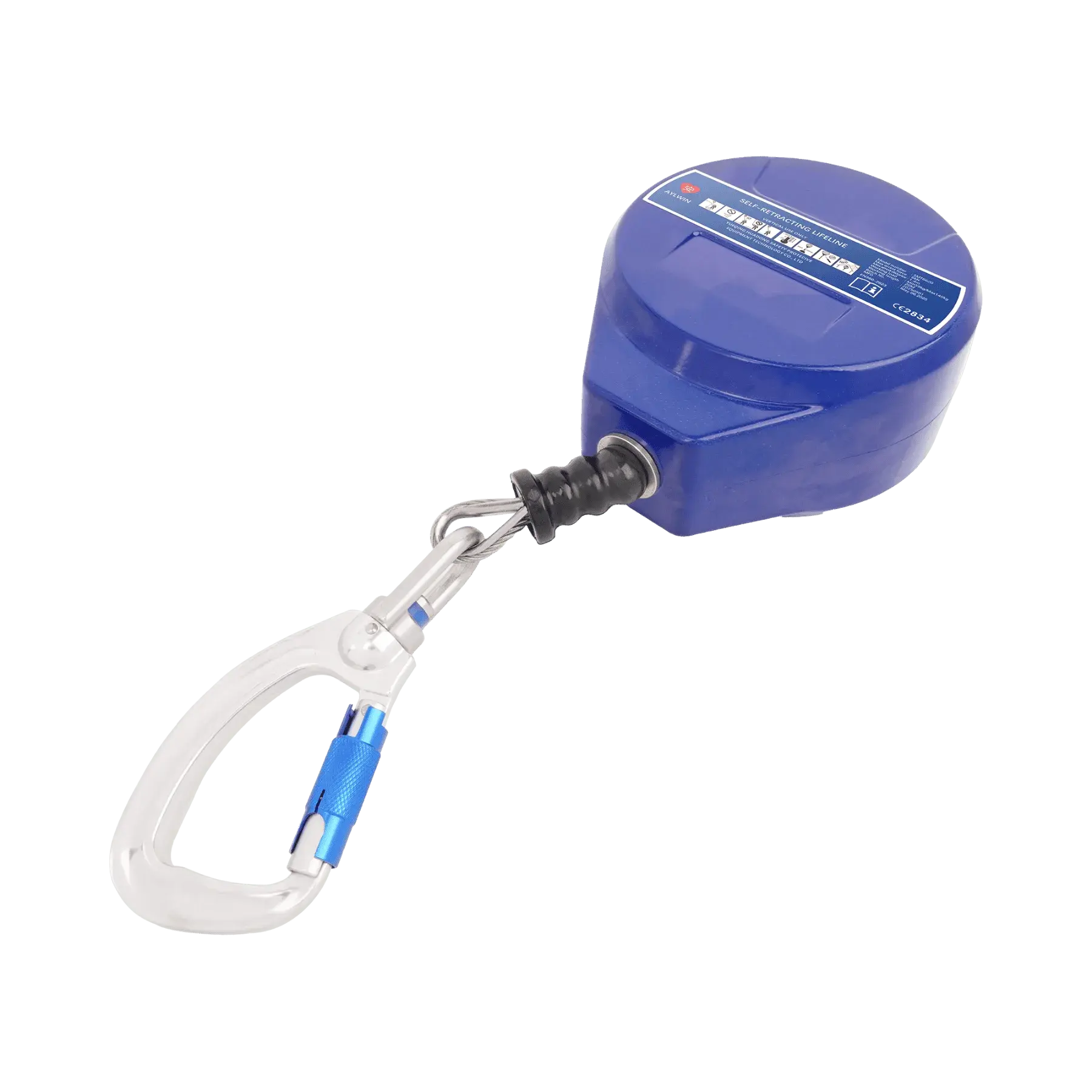
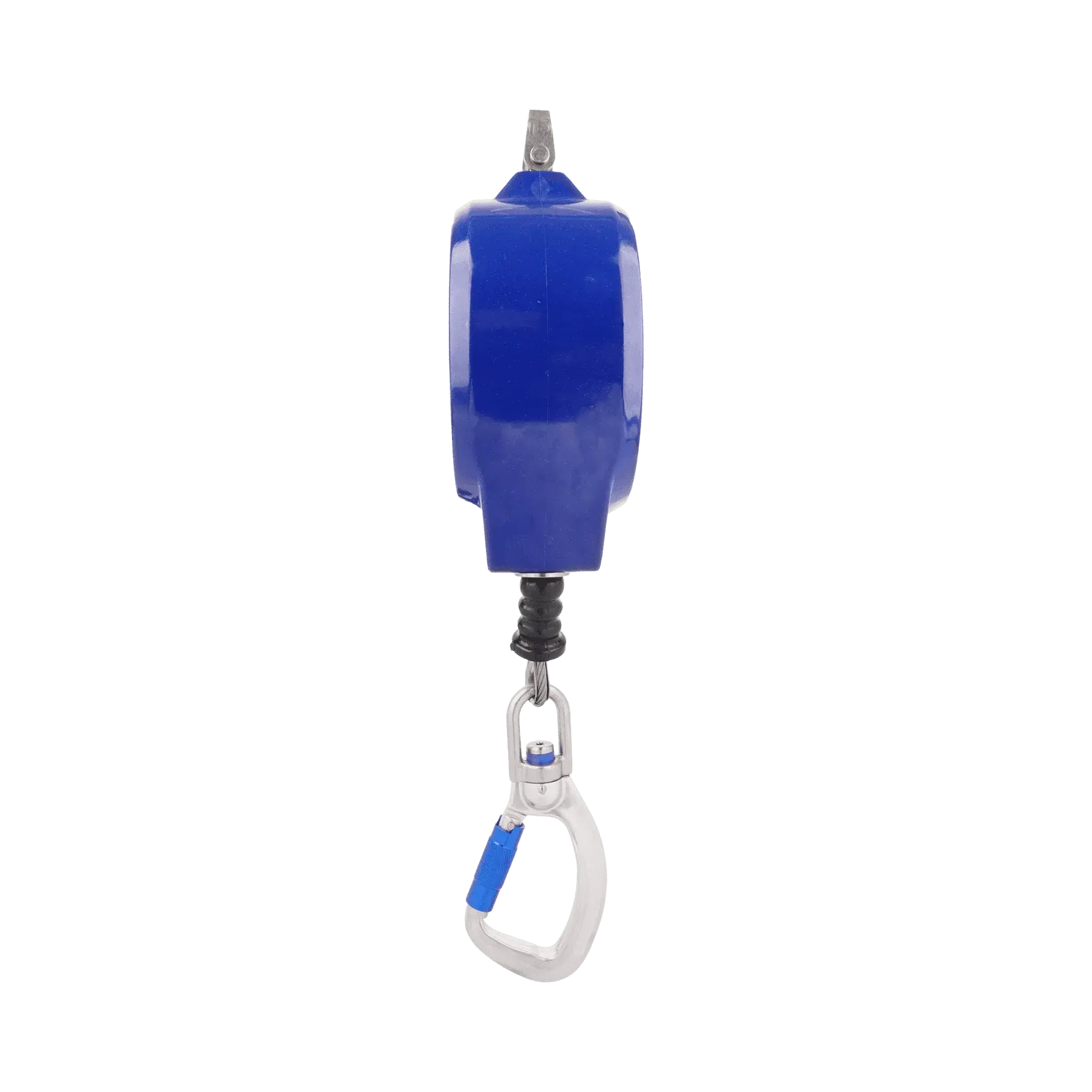
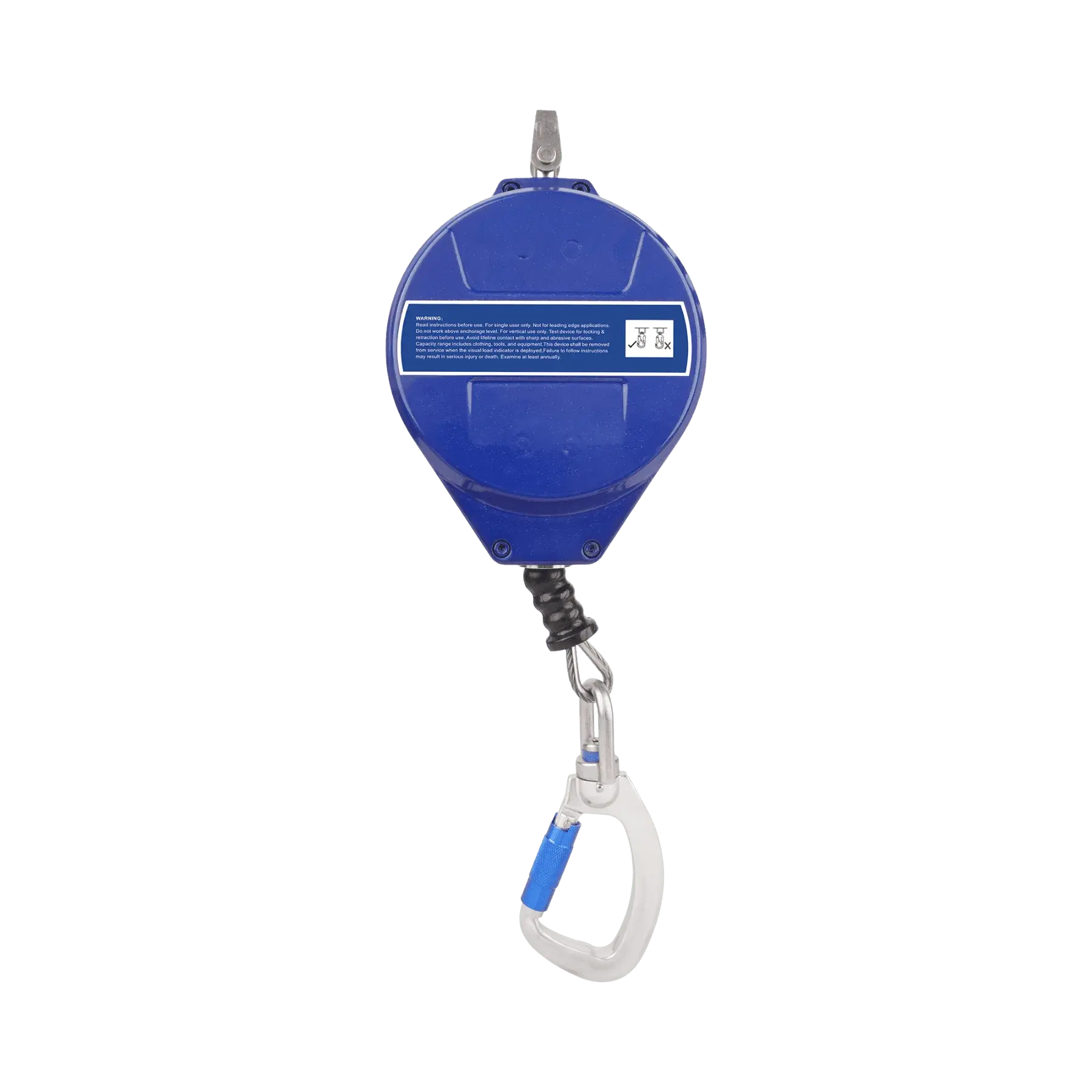
20 m · 59–140 kg · 4.8 mm wire rope · ≤6 kN arrest force · EN 360:2023
Contact for pricing
Sold with personalised assistance from our sales team — request a tailored quote.
It pays out as you move. It locks when you fall.
A self-retracting lifeline does one job and does it in a fraction of a second. The cable follows you as you work, under light spring tension, so there is no slack to trip over and nothing to re-clip. The moment it detects a fall, three independent locking pawls engage and a progressive brake brings you to a stop inside 1.4 metres.
That short arrest distance is the whole point of an SRL. A shock-absorbing lanyard can let you fall four metres or more before it stops you. This stops you in less than a third of that.
| Standard | EN 360:2023 |
|---|---|
| Certificate (Module B) | CE-PC-250428-230-03-9A |
| Type | Self-retracting lifeline (retractable fall arrester) |
| User capacity | 59–140 kg |
|---|---|
| Max. arrest force | ≤ 6 kN |
| Max. arrest distance | ≤ 1.4 m |
| Static strength | ≥ 12 kN |
| Lifeline length | 20 m |
|---|---|
| Lifeline | Steel wire rope, 4.8 mm |
| Connectors | Swivel top anchorage · bottom swivel connector with fall indicator |
| Housing | Painted aluminum |
|---|
| Users | Single user |
|---|---|
| Use | Vertical only, anchor above the user |
Add the complements you need — each is added on its own.
Not one mechanism with a backup — three that engage together. Redundancy is what keeps the arrest distance short and repeatable.
The brake does not grab. It builds resistance as it absorbs the energy of the fall, which is what keeps the peak force on your body under 6 kN instead of spiking.
The absorbing element is metal, not textile. It behaves the same in the cold, in a heatwave and soaked through — no seasonal variation in how hard it stops you.
A rotating anchorage at the top and a swivel connector at the bottom. The cable does not accumulate twist as you turn through a shift, and the device does not end up hanging crooked off the anchor.
A visual tell-tale that shows the device has arrested a fall. There is no guessing whether a unit that came back from site is still serviceable.
Cable, not webbing — it survives contact with structure, weld spatter and abrasion that would destroy a textile lifeline.
The cable can retract fast when you move toward the anchor. The spring-loaded grip stops it snagging or whipping at the exit point, which is where cheap SRLs jam.
The coating is specified to resist dirt build-up, so the unit still reads and inspects cleanly after months in a dusty environment.
Vertical use only, with the anchor point above the user. This device is not rated for foot-level use, for horizontal use, or for work over a sharp or unprotected edge. If your anchor cannot be placed above you, this is the wrong device and we will tell you so.
Confirm the required clearance below the user before every installation. The 1.4 m figure in the specifications is the arrest distance — not the clearance you need. The minimum clearance also depends on the extension of your harness, the height of the user and a safety margin, and it is specified in the manufacturer's instructions supplied with the device. If you do not have that figure in front of you, ask us before you install.
One user. Never connect two people to the same unit.
Connect to the dorsal attachment point of an EN 361 full body harness. A work positioning belt is not a substitute.
Inspect before every use. Check the cable along its full length, the housing, the connectors and the fall indicator. Confirm the cable retracts smoothly and locks when pulled sharply.
Remove from service after any fall. A unit that has arrested a fall — or that shows a tripped fall indicator — goes out of service and back to the manufacturer. It does not go back on the anchor.
Periodic examination by a competent person, in accordance with the manufacturer's instructions supplied with the device.
Category III is the classification the PPE Regulation reserves for equipment protecting against risks that can cause death or irreversible damage to health. It is the only category that requires ongoing surveillance of production by a notified body, not just a one-off examination of the design. Both certificates are held here — ask us for copies.
| Model | Lifeline | User capacity | Weight | Certificate |
|---|---|---|---|---|
| SMT6606 | 6 m | 59–140 kg | 3.2 kg | CE-PC-250428-230-01-9A |
| SMT6610 | 10 m | 59–100 kg | Pending | CE-PC-240527-236-02-9B |
| SMT6615 | 15 m | 59–140 kg | Pending | CE-PC-250428-230-02-9A |
| SMT6620 (this model) | 20 m | 59–140 kg | Pending | CE-PC-250428-230-03-9A |
| SMT6630 | 30 m | 59–140 kg | Pending | CE-PC-250428-230-04-9A |
The 10 m model (SMT6610) is certified for a user capacity of 59–100 kg. Every other model in the range is certified to 140 kg. Check the total weight of the user plus tools and clothing against this figure before specifying it.
The right length is the shortest one that lets you reach the whole work area from the anchor. Longer is not safer — it is heavier, and it costs more. Tell us what you are working on and where the anchor sits, and we will tell you which unit to buy and what else you need with it.
4 items
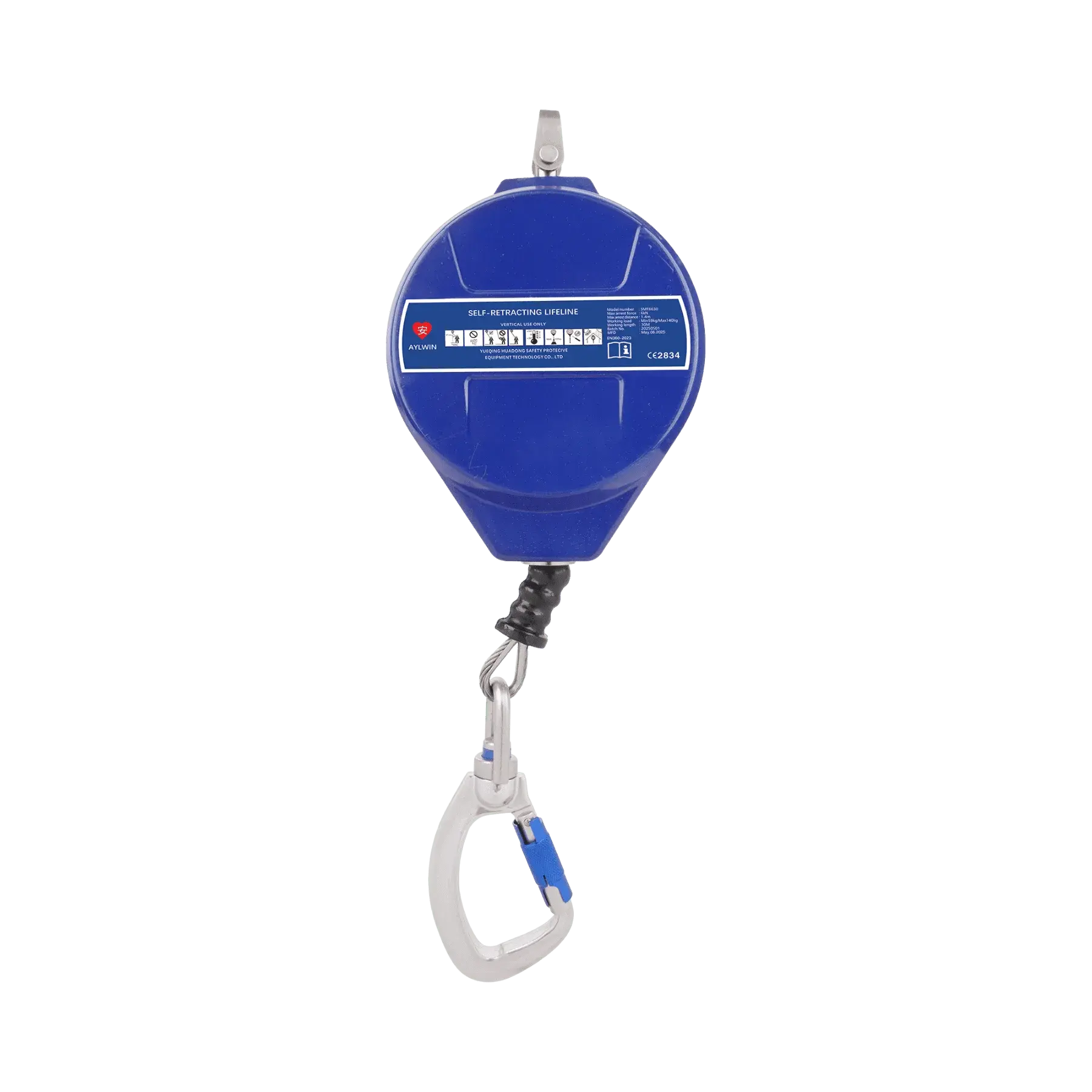 Aylwin
30 m · 59–140 kg · 4.8 mm wire rope · ≤6 kN arrest force · EN 360:2023
Request a Quote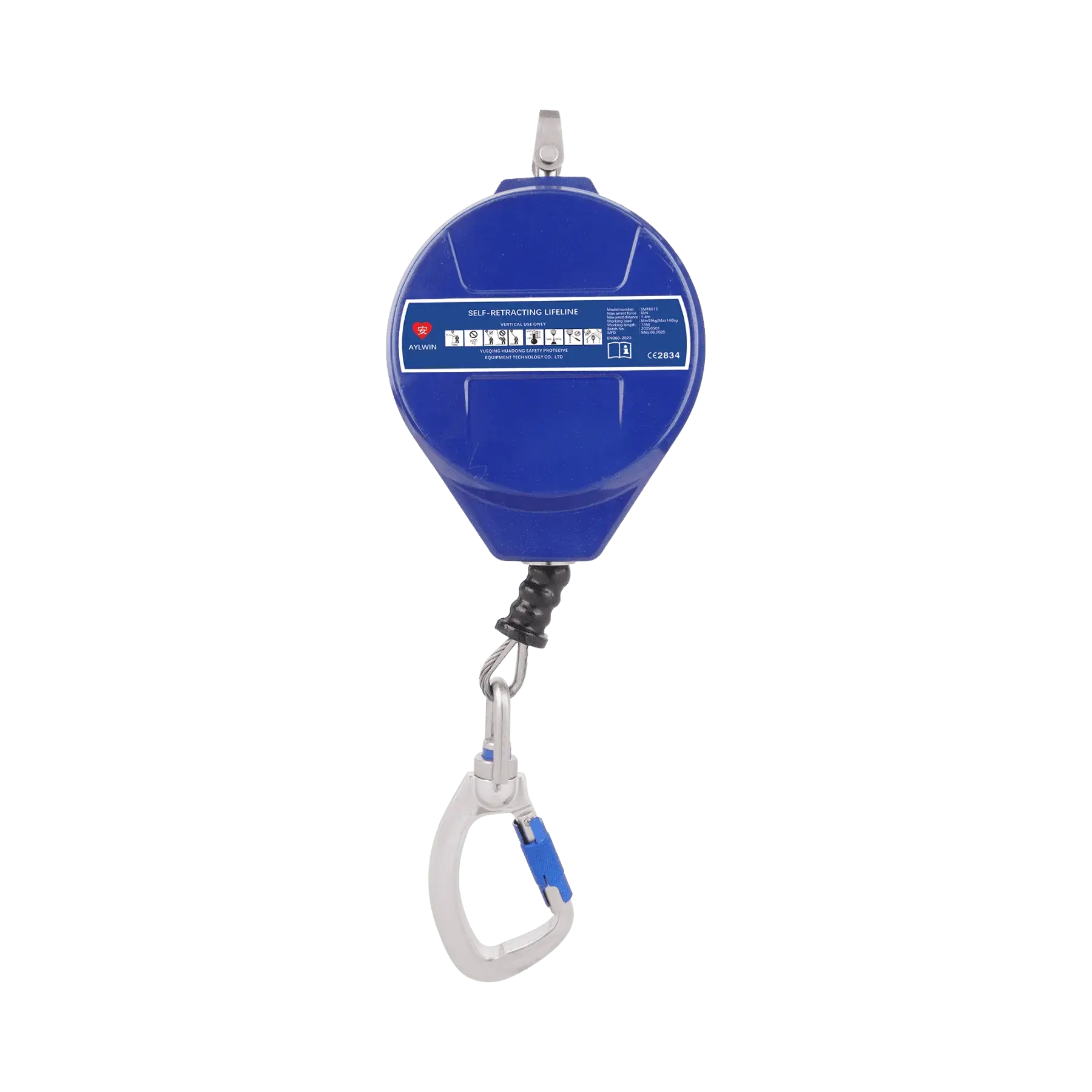 Aylwin
15 m · 59–140 kg · 4.8 mm wire rope · ≤6 kN arrest force · EN 360:2023
Request a Quote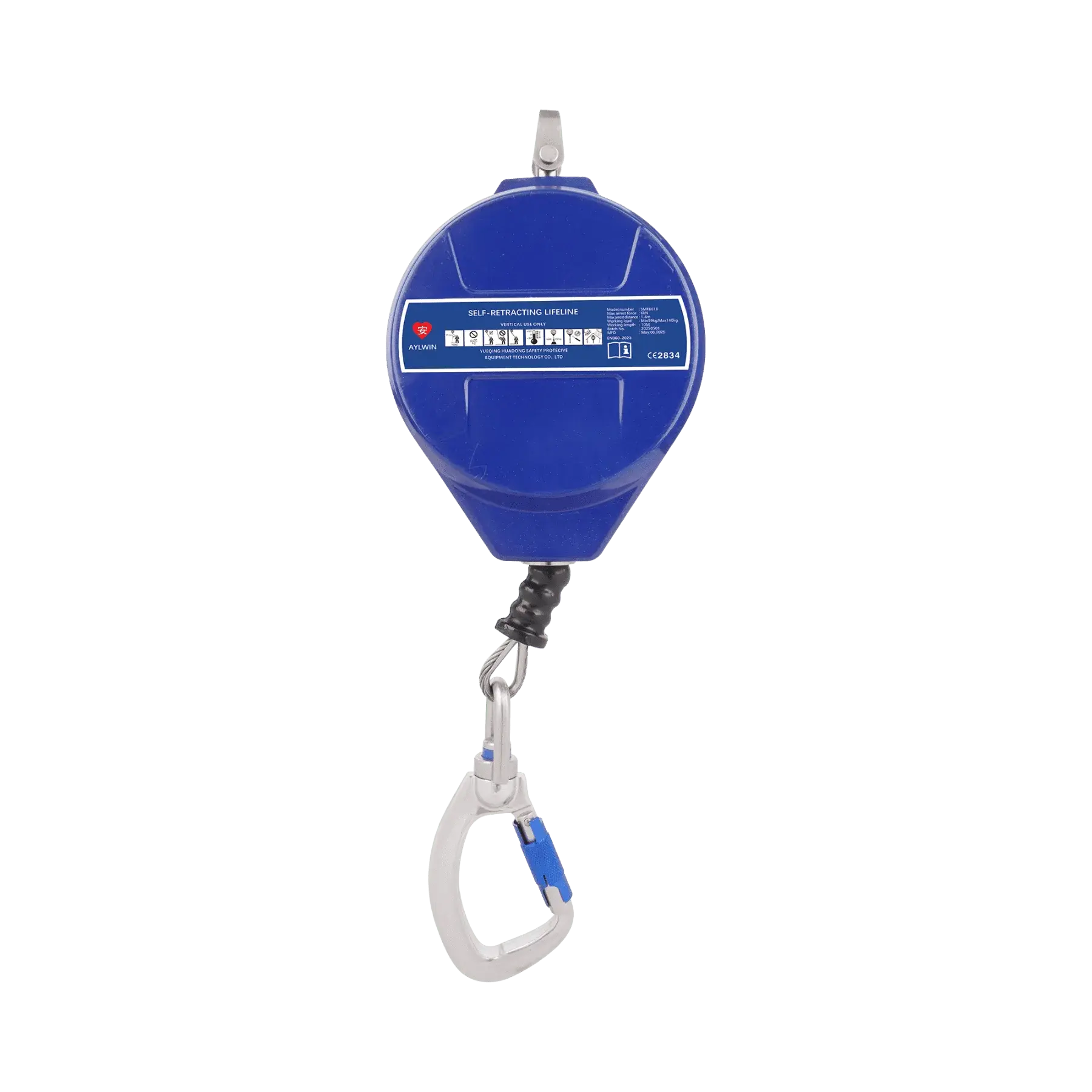 Aylwin
10 m · 59–100 kg · 4.8 mm wire rope · ≤6 kN arrest force · EN 360:2023
Request a Quote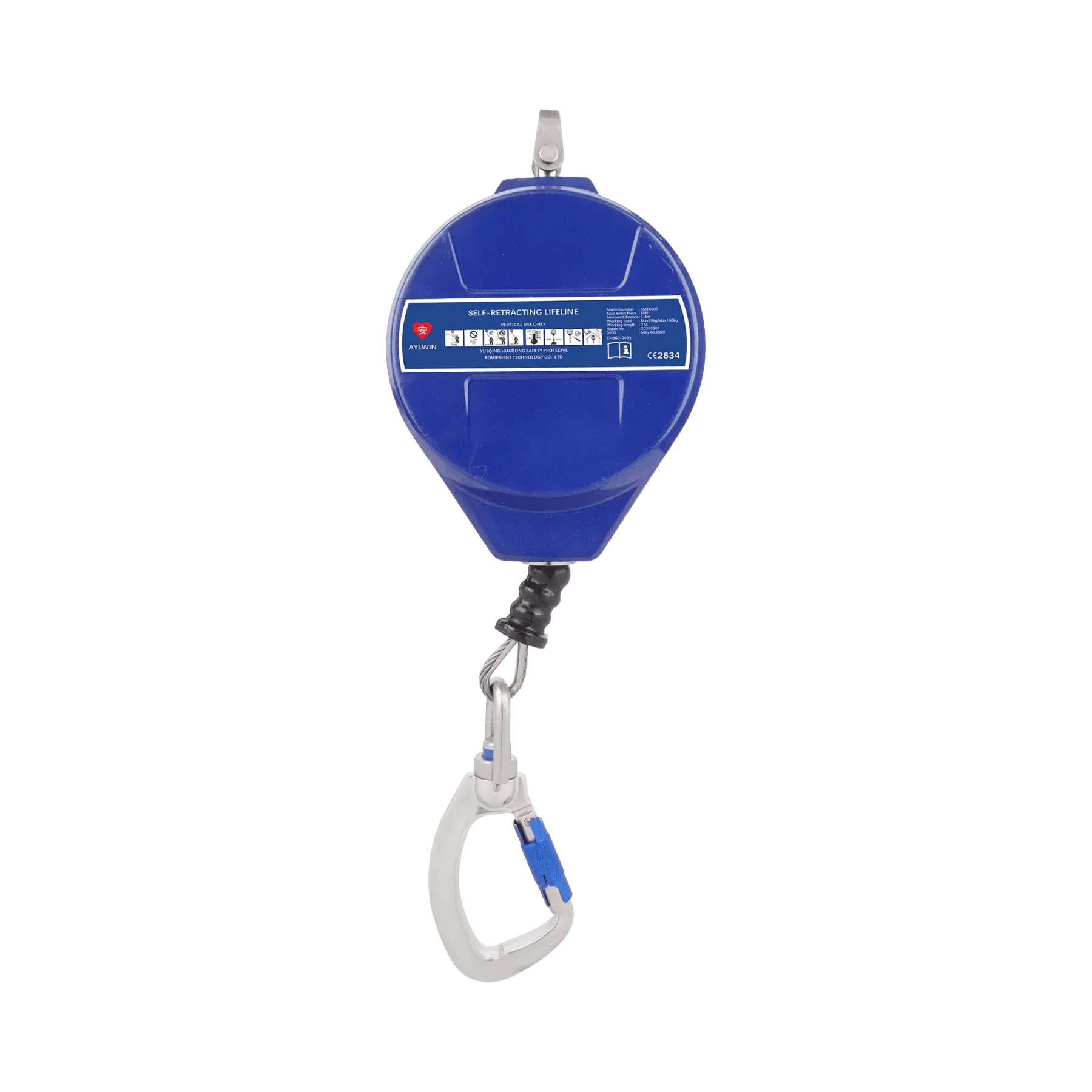 Aylwin
6 m · 59–140 kg · 4.8 mm wire rope · ≤6 kN arrest force · EN 360:2023
Request a Quote