
Guided-type fall arresters and rope grabs that travel with you on a vertical line and lock on a fall. For rope, cable and rail systems on ladders, towers and inclined access.
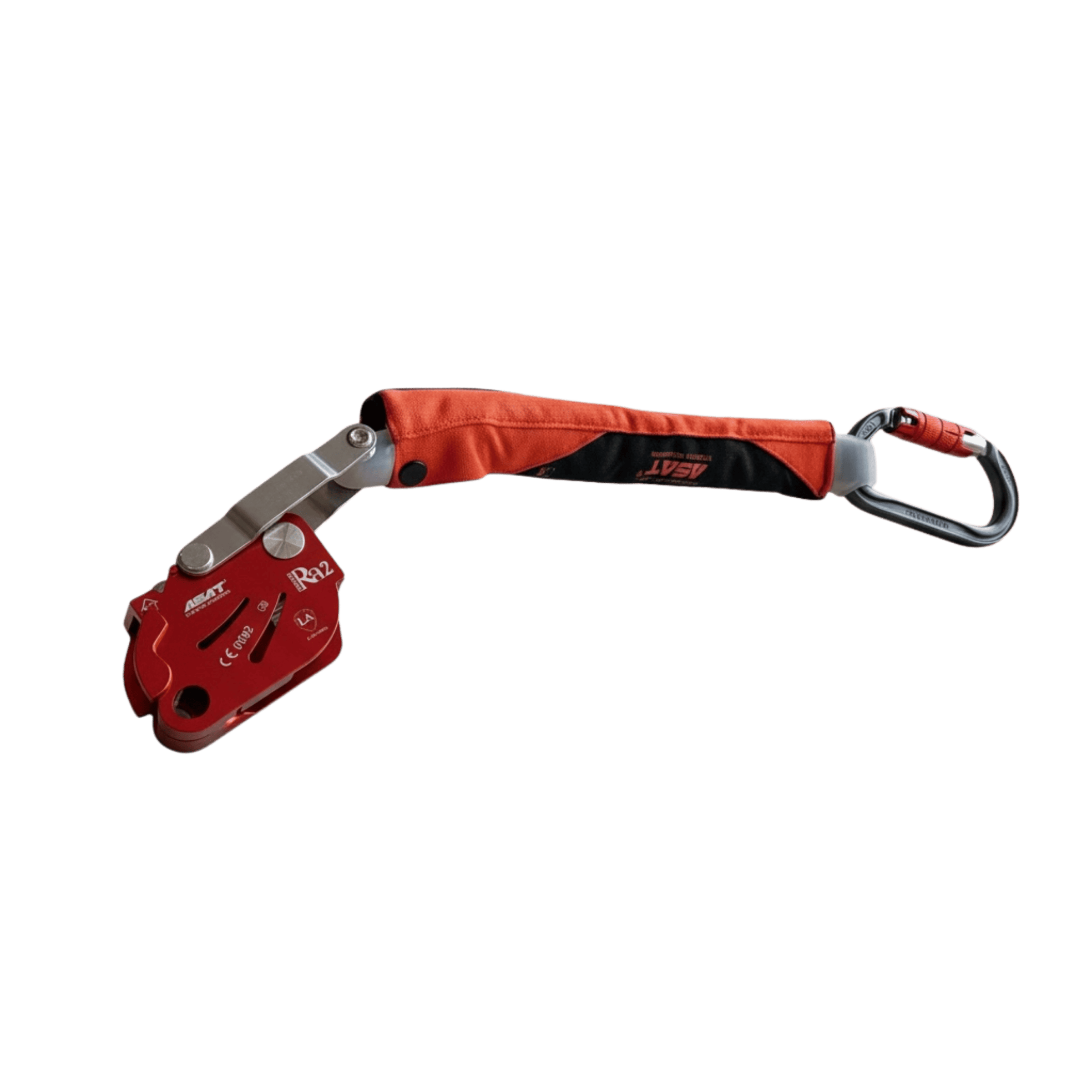 ASAT
ASAT
Type A rope access fall arrester with energy absorber lanyard (EN 12841:2024)
$325 USD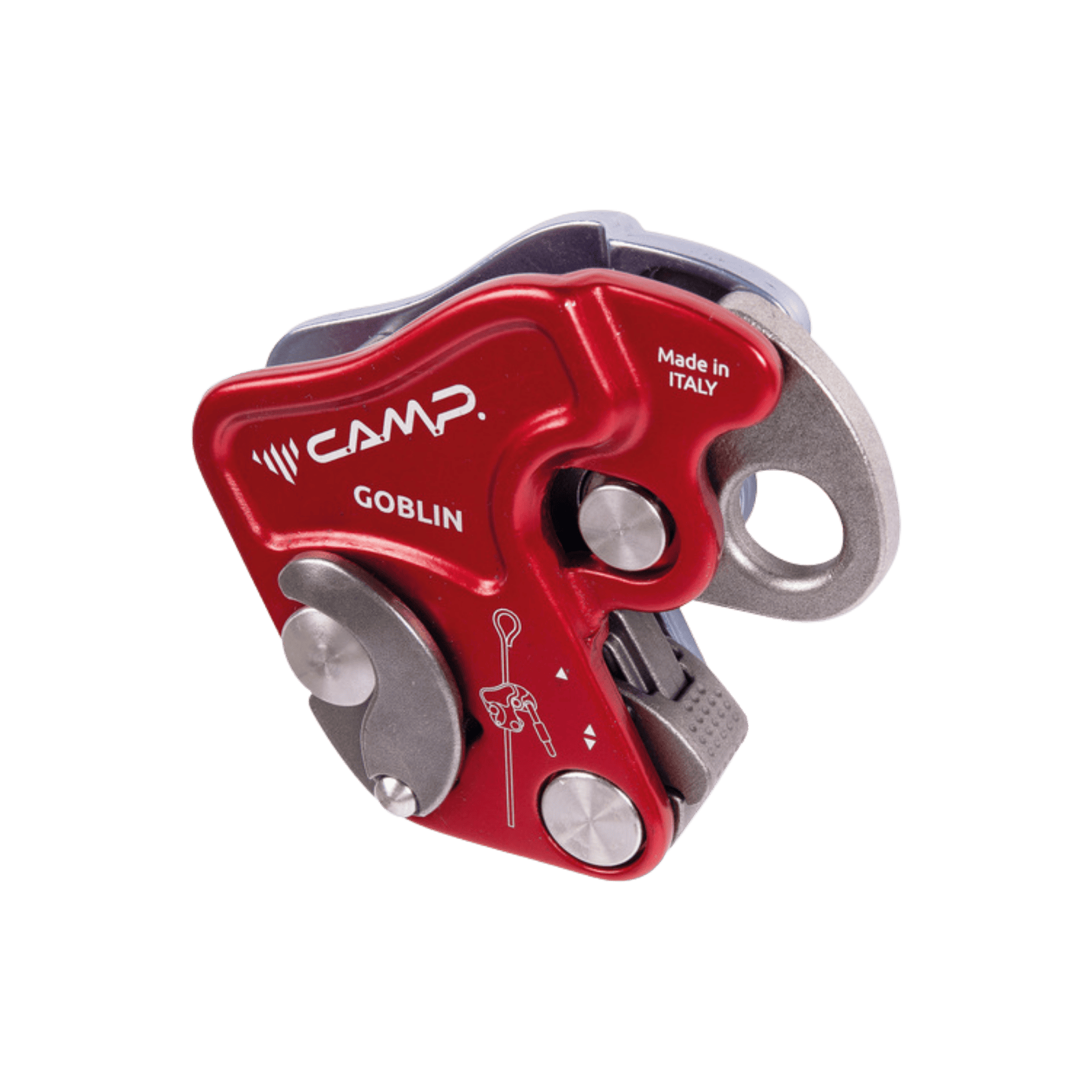 CAMP
CAMP
Three families, matched to three kinds of anchor line. Guided cable fall arresters for permanent ladder systems on masts, towers and industrial structures. A guided rail arrester where the installation uses rigid track. And mobile rope fall arresters, including complete kits, for rope backup, roof work and temporary vertical lifelines.
Alongside them we stock horizontal lifeline travellers and sliders, which solve the sideways version of the same problem — staying connected while moving along a cable or rail on a roof, gantry or structure edge.
The one thing to send us before ordering is what the device will run on. These are certified with a specific anchor line, and the pairing is the part that gets bought wrong.
A guided-type fall arrester rides on a fixed anchor line — a rope, a cable or a rail — and follows the worker as they climb or descend. Under normal movement it travels freely. When it senses a fall, it locks onto the line and arrests it, usually within a short distance.
The distinction from a self-retracting lifeline is where the device lives. An SRL sits at the anchor and pays line out; a guided-type arrester travels on the line with the worker. That makes it the standard answer for ladder climbing systems and for vertical lifelines on masts and towers, where the anchor line runs the full height of the structure.
Rope grabs work on flexible synthetic anchor lines and suit rope access backup, roof work and temporary vertical lifelines. Cable arresters run on galvanised or stainless steel wire and are the usual fit for permanent ladder systems, where the line stays installed and takes weather year-round.
Rail systems use a rigid steel or aluminium track with a matched travelling shuttle. They are the most positive of the three — the shuttle cannot come off the rail accidentally — and are common on fixed ladders in industry, telecom and wind.
Horizontal lifeline travellers belong to the same family but solve a different problem: keeping a worker connected while moving sideways along a cable or rail, on a roof, a gantry or a structure edge.
A guided-type fall arrester is tested and certified together with the anchor line it was designed for, and only with that line. Fitting a rope grab to a rope of a different diameter, construction or manufacturer changes how it grips and can stop it locking as intended.
This is the single most common specification error in this category. Check the instructions for the exact anchor line the device is approved with, and treat the pair as one product rather than two compatible parts.
EN 353-1 covers guided-type fall arresters on a rigid anchor line — cable and rail systems. EN 353-2 covers guided-type fall arresters on a flexible anchor line, which is where rope grabs sit. In North America, ANSI Z359.15 covers single-anchor flexible line arresters.
Rope access has its own standard, and it is the one to look for if that is your work: EN 12841 Type A covers back-up devices running on the safety line of a rope access system, alongside Type B for ascenders and Type C for descenders on the working line. A rope grab certified only to EN 353-2 is not the same specification as a rope access back-up device, though many products carry both.
Which standard a particular device meets, and which anchor line it is approved for, is stated in its declaration of conformity and instructions. Read both before specifying, because the standard alone does not tell you the line compatibility.
Every arrest needs distance to happen in. The total is made up of the arrester's own locking distance, any energy absorber in the connection, the stretch of the anchor line under load, and the height of the worker below their attachment point, plus a safety margin to the nearest obstruction.
On a tall mast that arithmetic is comfortable. Close to the base of a ladder, on a short climb or above plant and structure, it is often the deciding constraint — and it is worked out from the manufacturer's stated figures for the specific device and line, not from a general rule.
A rope grab is a type of guided-type fall arrester — the version that runs on a flexible anchor line such as a rope. The broader term also covers devices that run on steel cable or on a rigid rail. All of them travel on the line with the worker and lock when a fall is detected.
No. A guided-type fall arrester is certified together with the specific anchor line it was designed for, and rope diameter and construction affect how it grips. Using a different rope can prevent it locking as intended. The approved line is named in the device instructions.
EN 353-1 applies to guided-type fall arresters on a rigid anchor line, meaning cable and rail systems. EN 353-2 applies to guided-type fall arresters on a flexible anchor line, which is where rope grabs fall. Both cover devices that travel on the line with the user. For rope access specifically, the back-up device on the safety line is covered by EN 12841 Type A instead; many devices are certified to both, but they are not the same specification.
A guided-type arrester suits vertical climbing on a fixed anchor line that runs the height of the structure, such as a ladder system on a mast or tower. An SRL suits work under an overhead anchor where the worker moves around beneath it. The structure and the anchor line available usually decide it.