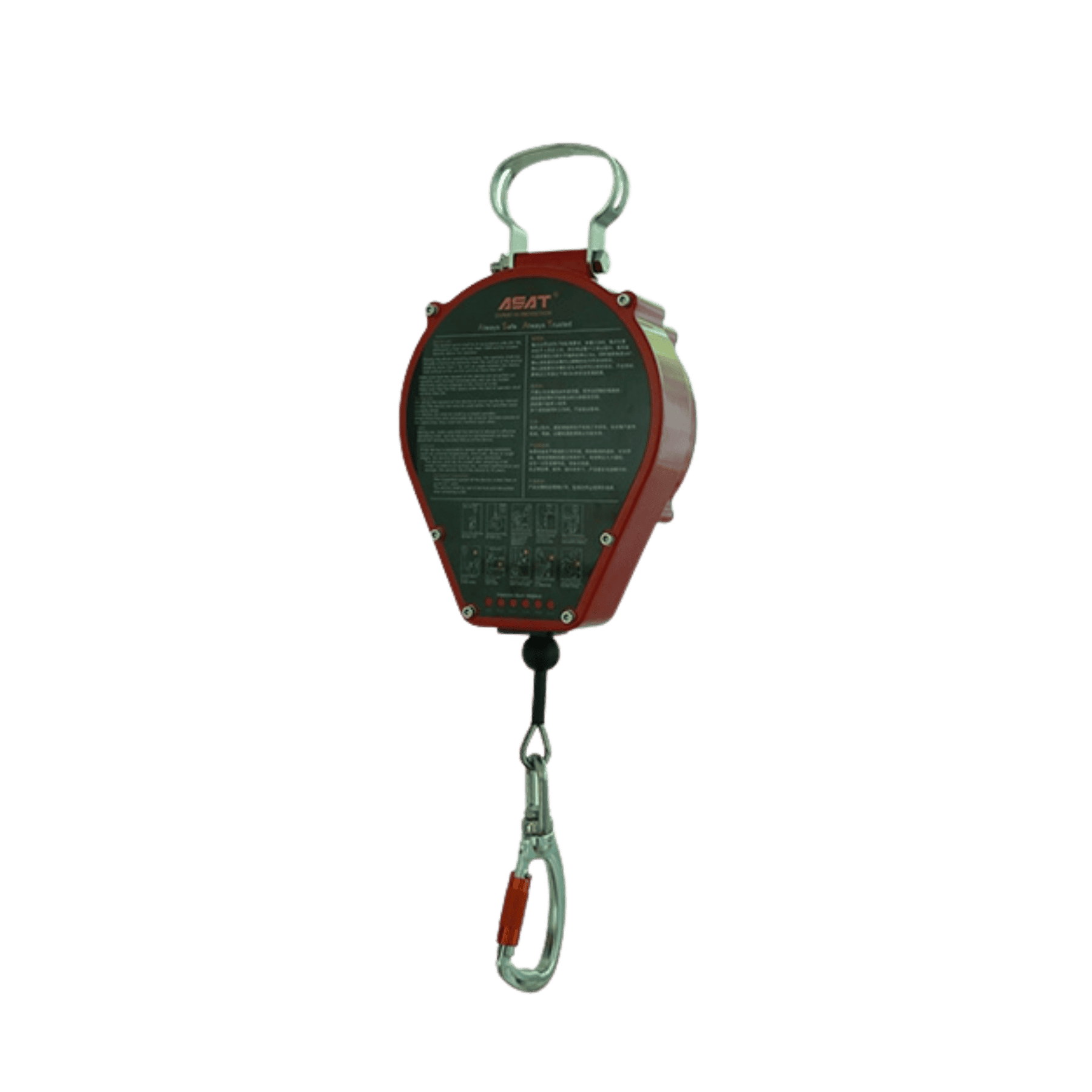
10 m sealed SRL · Ø5 mm stainless cable · built for offshore salt, humidity and dust · EN 360
$1,000 USDIn stock
Pay over time (US customers) with
Everything that kills an SRL is on the outside
Salt. Water. Dust. Oil. Over a couple of seasons offshore, they work their way into a retractable fall arrester and do their damage where nobody can see it: on the locking mechanism, on the brake, on the spring.
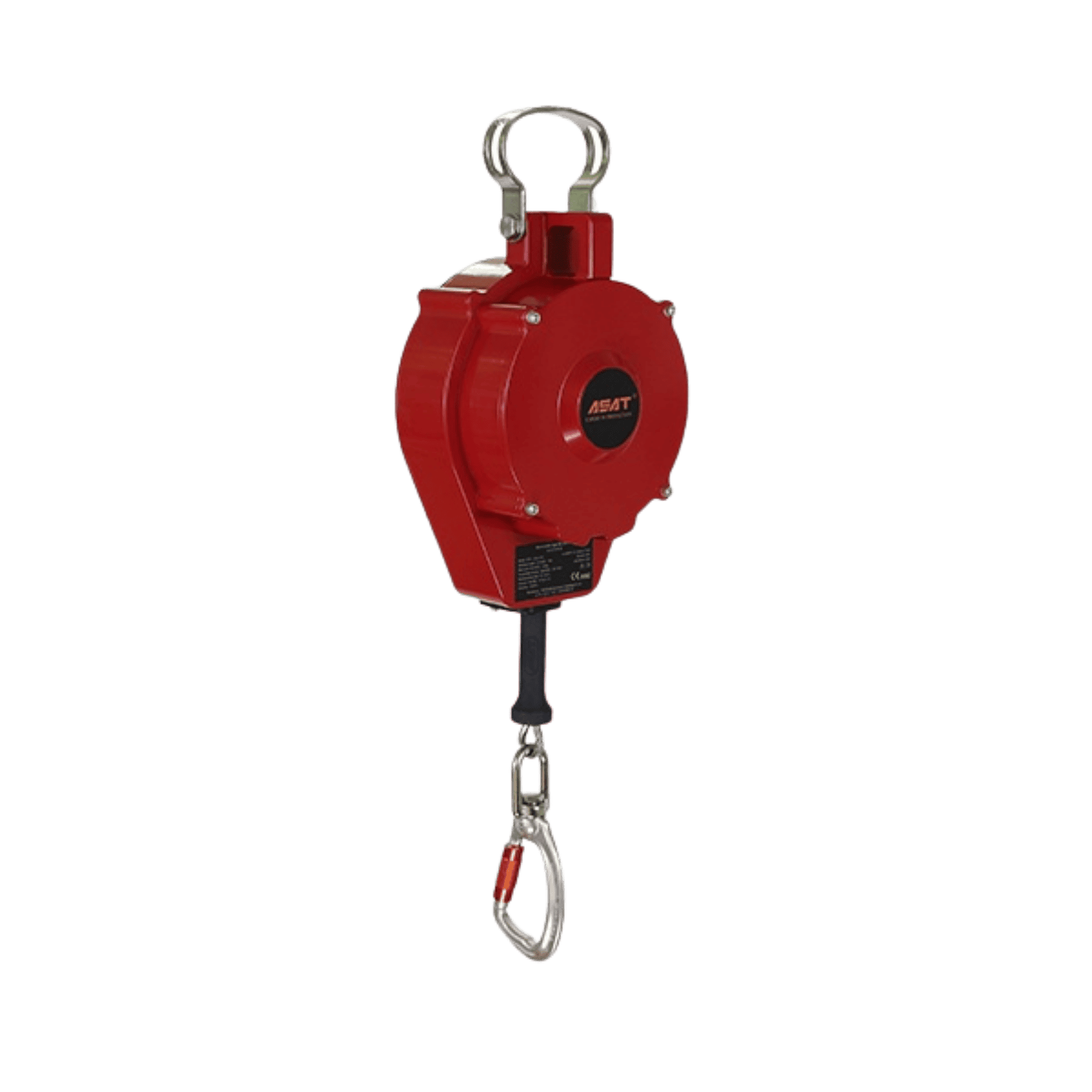
The ASAT sealed SRL puts the centrifugal lock, the energy absorber and the rest of the core mechanism inside their own sealed chamber, in a separate compartment from the cable drum. The things that destroy a fall arrester never reach the parts that have to work.
That is the product. Everything else follows from it.
| Standard | EN 360 |
|---|---|
| Secondary standard | GB 24544 |
| Type | Self-retracting lifeline (retractable fall arrester) |
| Max. user weight | 150 kg (330 lb) |
|---|---|
| Max. arrest force | < 6 kN |
| Static strength | 16 kN |
| Working length | 10 m (33 ft) |
|---|---|
| Cable | Ø5 mm stainless steel wire rope |
| End connector | 360° swivel snap hook with load/fall indicator |
| Housing | Sealed, corrosion-resistant chamber (offshore / wind / marine) |
|---|---|
| Energy absorber | Built-in |
| Unit weight | 9.3 kg |
|---|
Add the complements you need — each is added on its own.
The core mechanisms sit in an individual sealed case that isolates them from oil, water, air and dust. The manufacturer's claim is specific and worth repeating as stated: even in harsh environments, the locking performance is not affected.
The lifeline is Ø5 mm stainless steel wire rope, salt-spray tested for 2,000 hours without rust. On a conventional galvanized cable, offshore corrosion starts at the sheath long before anyone writes it up on an inspection sheet.
Aluminum alloy and stainless steel throughout — resistant to salt, alkali, heat, cold and UV.
The unit can be supplied with a super duplex stainless steel carabiner developed for seawater and hot seawater service. Ask us for it — it is not fitted by default.
The energy absorber uses a large friction disc rather than a tear-webbing pack. With a 150 kg load fall, impact force stays stably below 6 kN.
This is the part that matters offshore and is easy to miss on a spec sheet: if another fall occurs during self-rescue or during rescue after a first fall, the absorber still controls impact force at 6 kN. A tear-webbing absorber is spent once it has deployed. This one has margin left.
The centrifugal mechanism adjusts to different loads, which cuts the vibration through the arrest and shortens the time to lock.
Both the European and the Chinese national standard ask for 12 kN static strength. These test at 16 kN — a third above the bar, not a hair over it.
1,000 retraction cycles. 2,000 reliability tests.
The attachment point is purpose-built for offshore wind: it connects directly to the tower foundation in several ways, without a sling and connectors in between.
Two things come from that. The unit swings far less in sea wind — anyone who has watched an SRL hanging on a sling inside a tower knows how much it moves and how much it scrapes. And the attachment point itself absorbs part of the impact force during an arrest.
360° swivel connector with fall indicator — the cable does not accumulate twist through a shift, and a unit that has arrested a fall says so without anyone having to remember.
Traction cord — so the hook can be brought down and returned without a second person or a reach pole.
Turbine towers, nacelles, transition pieces, service vessels.
Platforms, rigs, flare structures.
Cranes, loading arms, vessel structures.
Anywhere salt-laden air reaches the equipment, or gear is stored long between uses.
This is a corrosion-environment device. For general construction and indoor industry, a standard SRL costs considerably less and does the same job — ask us and we will point you to one. Nobody should pay for a sealed chamber they will never need.
Vertical use, with the anchor point above the user. Not rated for foot-level use, horizontal use, or work over a sharp or unprotected edge.
One user. Never connect two people to the same unit.
Connect to the dorsal attachment point of an EN 361 full body harness.
Inspect before every use — the full length of the cable, the housing, the connectors and the fall indicator. Confirm the cable retracts smoothly and locks when pulled sharply.
Remove from service after any fall, or if the fall indicator has tripped.
Periodic examination by a competent person, in accordance with the manufacturer's instructions supplied with the device.
| Model | Lifeline | Weight |
|---|---|---|
| FAS-0106 | 6 m (20 ft) | 8.3 kg |
| FAS-0110 (this model) | 10 m (33 ft) | 9.3 kg |
| FAS-0115 | 15 m (49 ft) | 9.8 kg |
| FAS-0120 | 20 m (66 ft) | 11.5 kg |
All four share the same mechanism, the same Ø5 mm stainless cable, the same 150 kg capacity and the same sealed construction. The only differences are working length and weight.
Pick the shortest length that reaches your whole work area from the anchor. Longer is heavier and costs more — and somebody has to carry it up.
Offshore operators run these on a replacement and inspection cycle, not as one-off purchases. Tell us your fleet size and where you are in that cycle and we will quote accordingly — including the seawater carabiner option and the documentation your inspection regime needs.
4 items
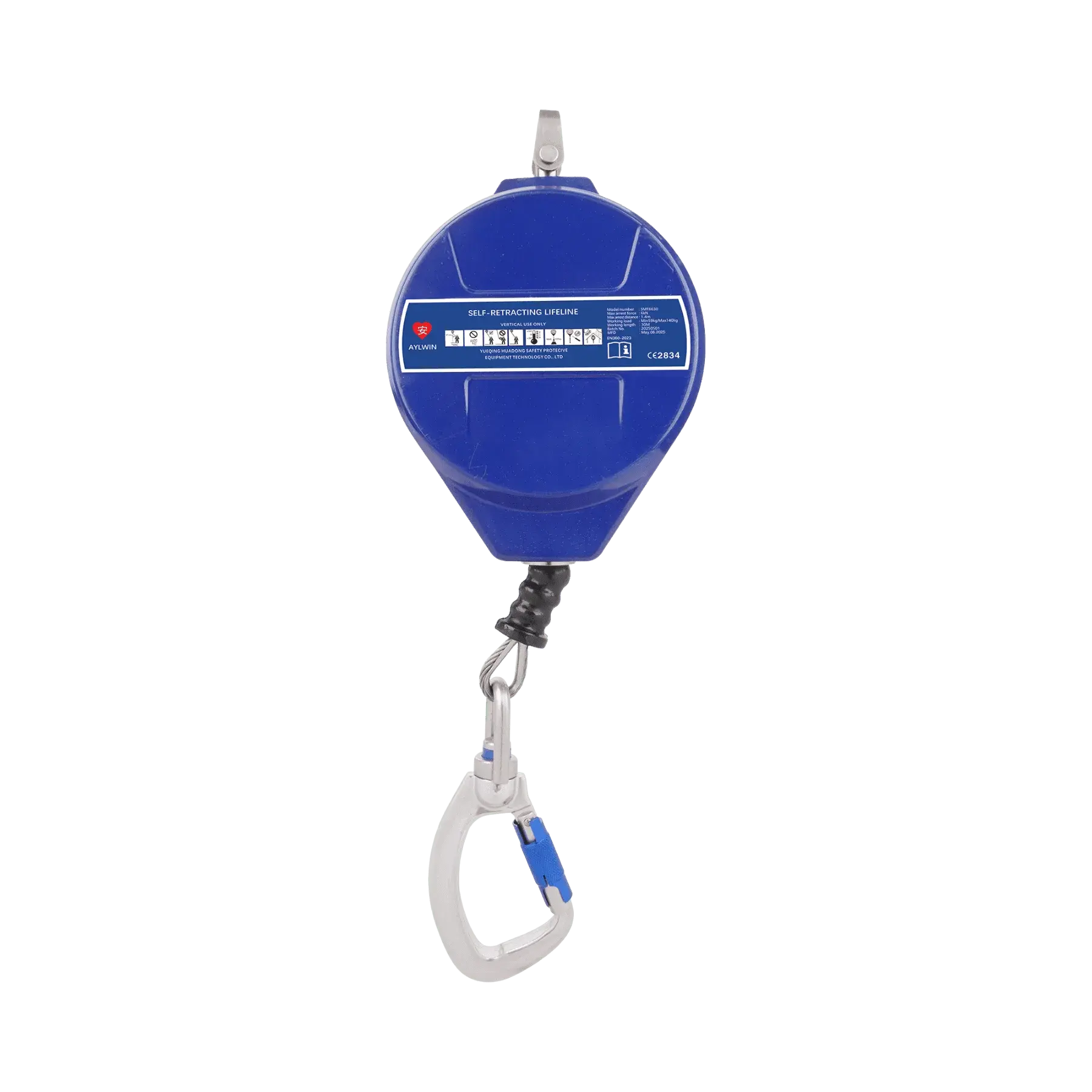 Aylwin
30 m · 59–140 kg · 4.8 mm wire rope · ≤6 kN arrest force · EN 360:2023
Request a Quote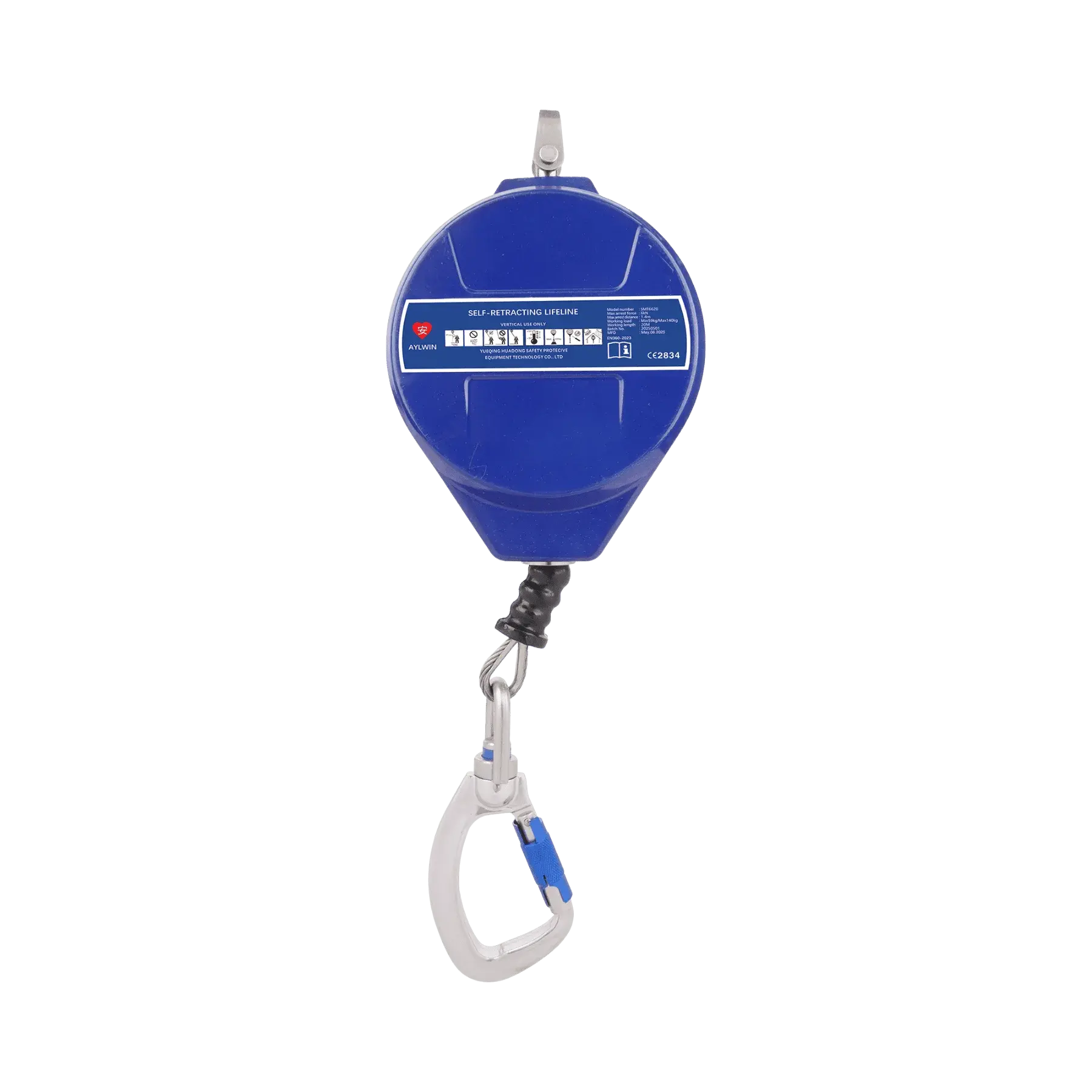 Aylwin
20 m · 59–140 kg · 4.8 mm wire rope · ≤6 kN arrest force · EN 360:2023
Request a Quote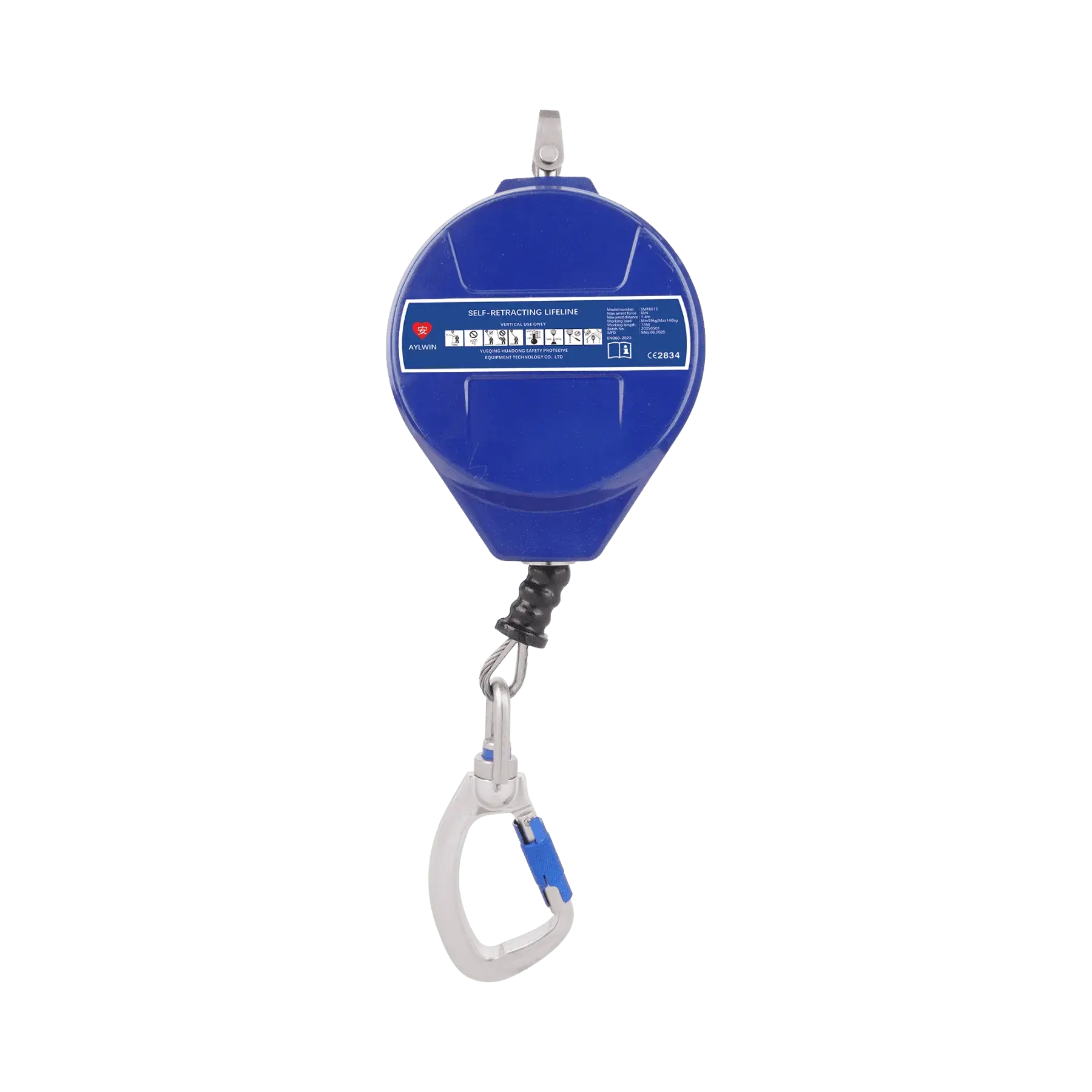 Aylwin
15 m · 59–140 kg · 4.8 mm wire rope · ≤6 kN arrest force · EN 360:2023
Request a Quote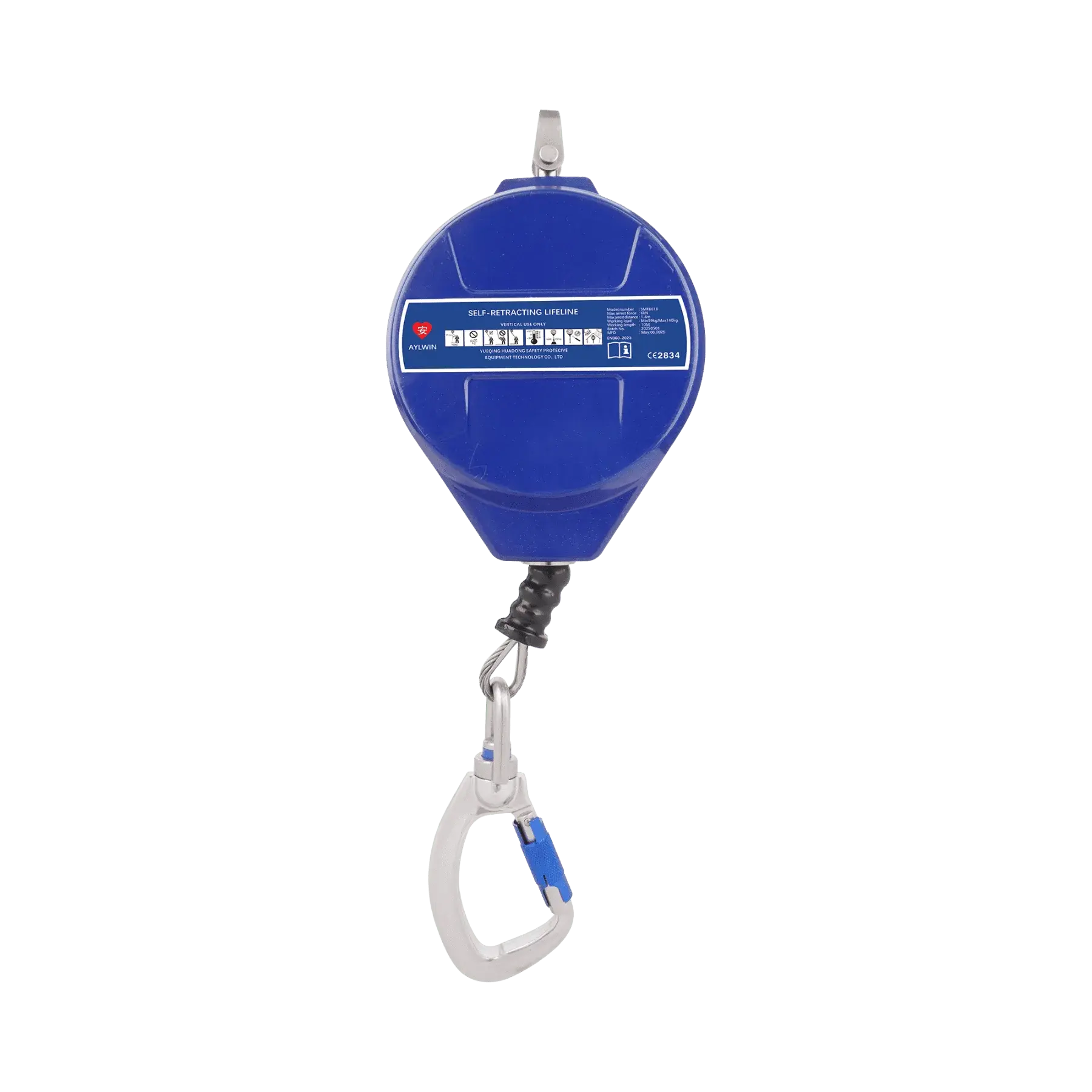 Aylwin
10 m · 59–100 kg · 4.8 mm wire rope · ≤6 kN arrest force · EN 360:2023
Request a Quote