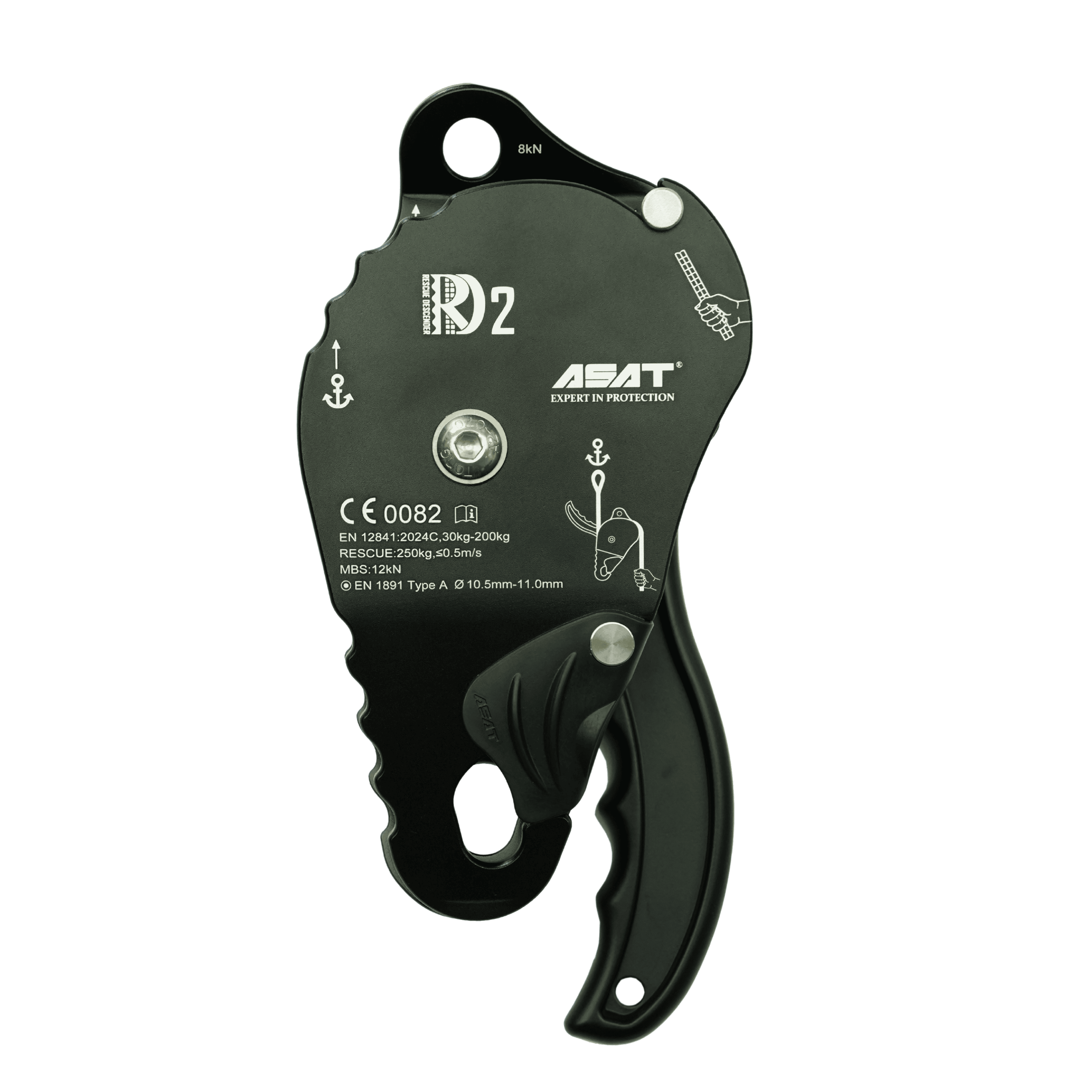
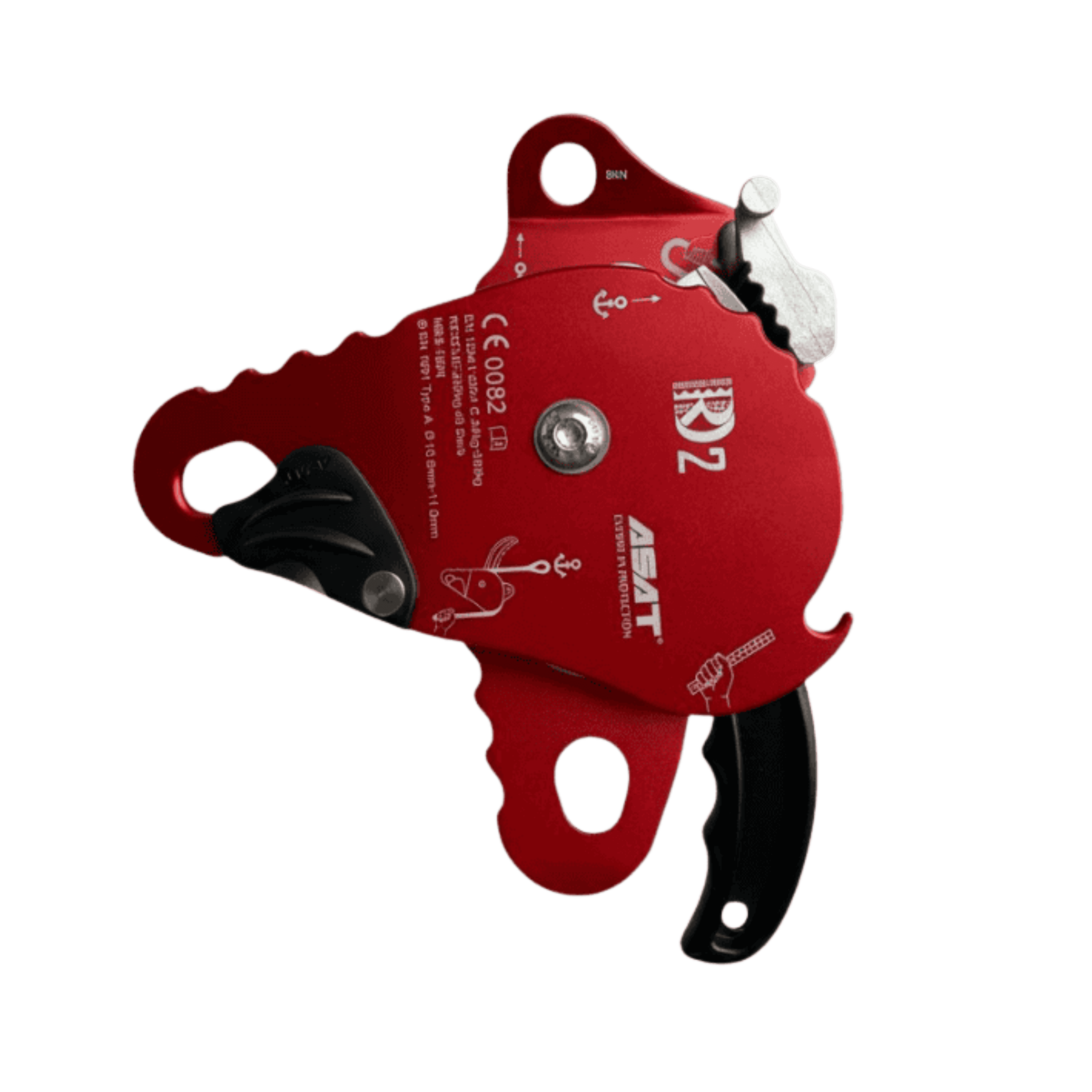
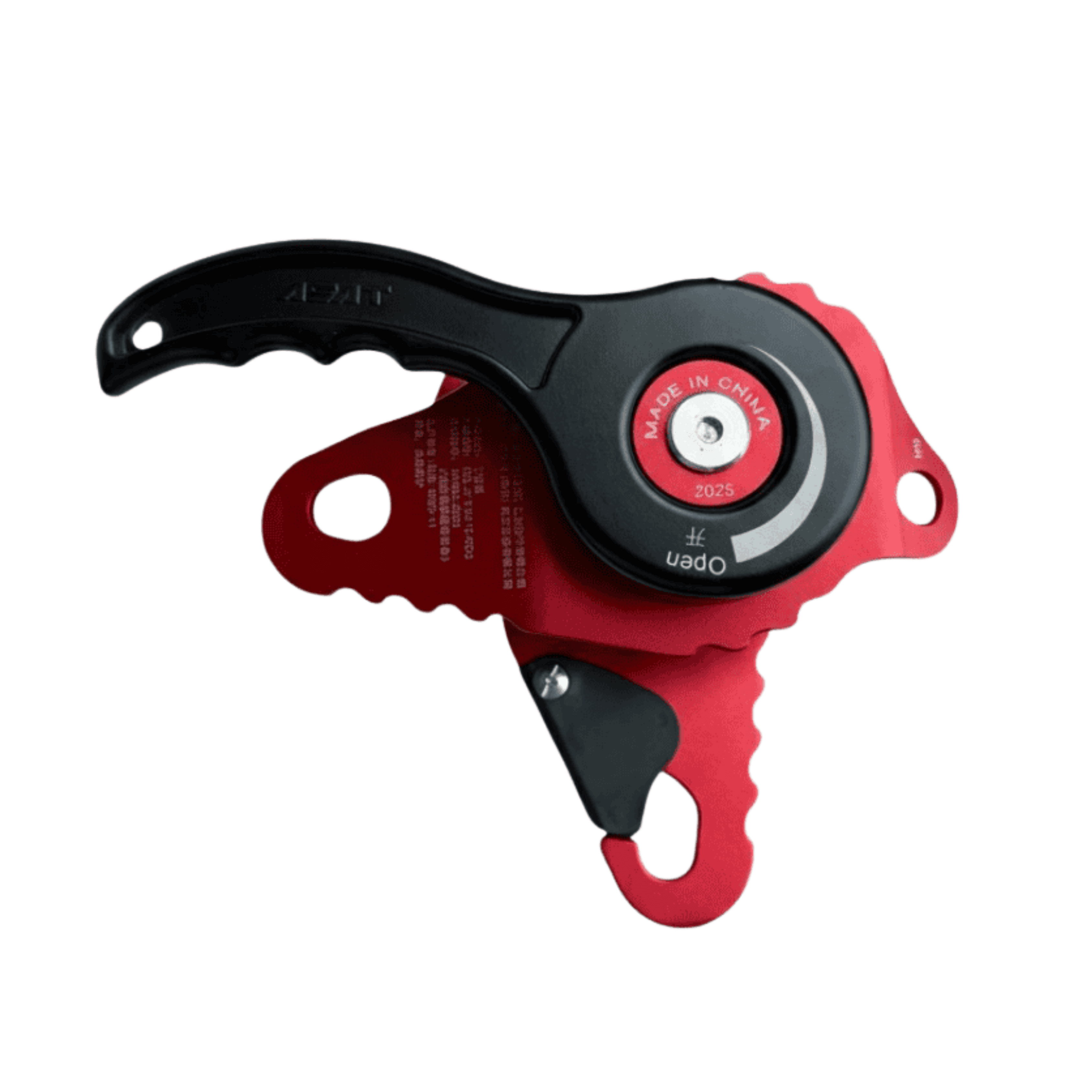
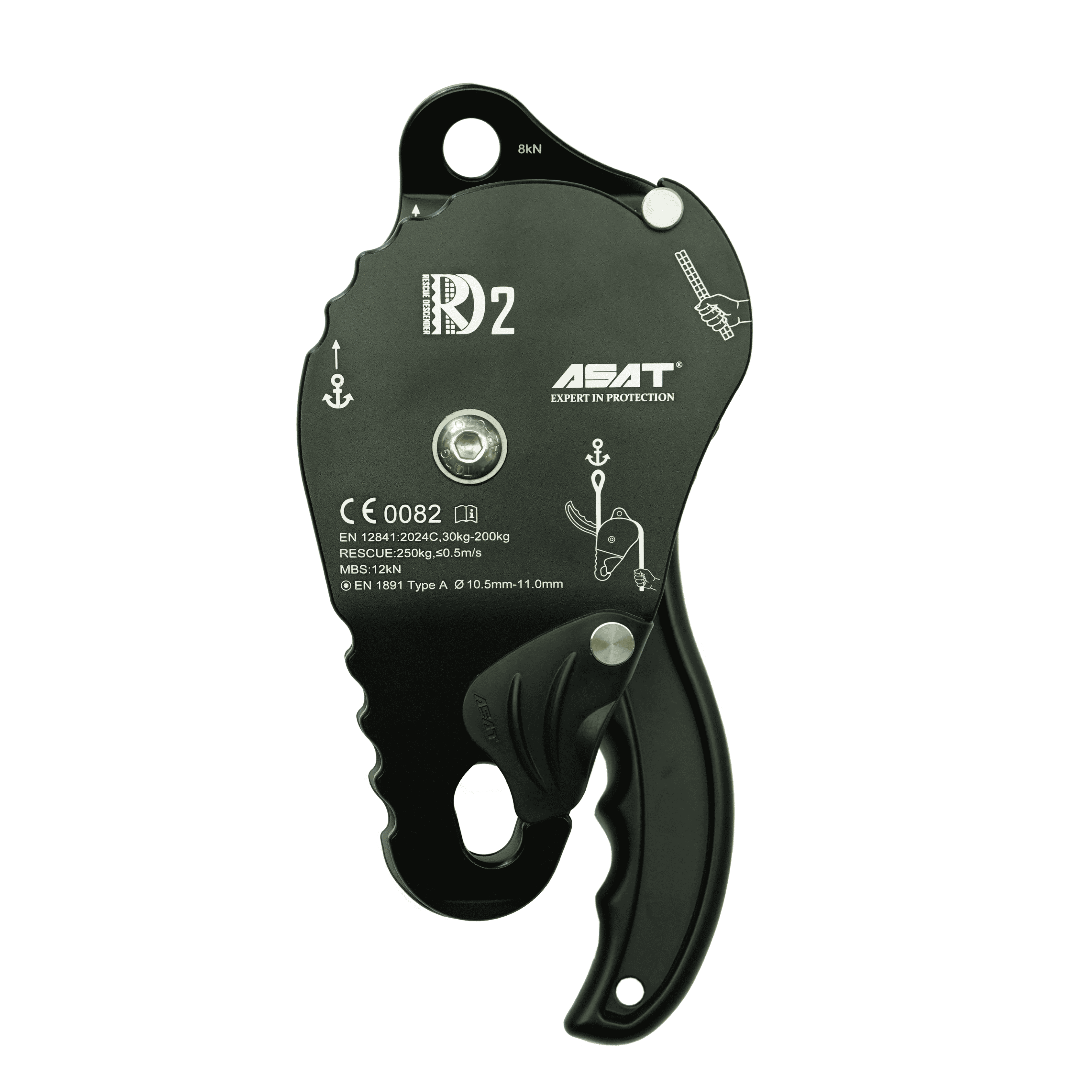
Self-braking descender with integrated high-efficiency pulley · EN 12841:2024 Type C
$350 USDOnly 5 left
Pay over time (US customers) with
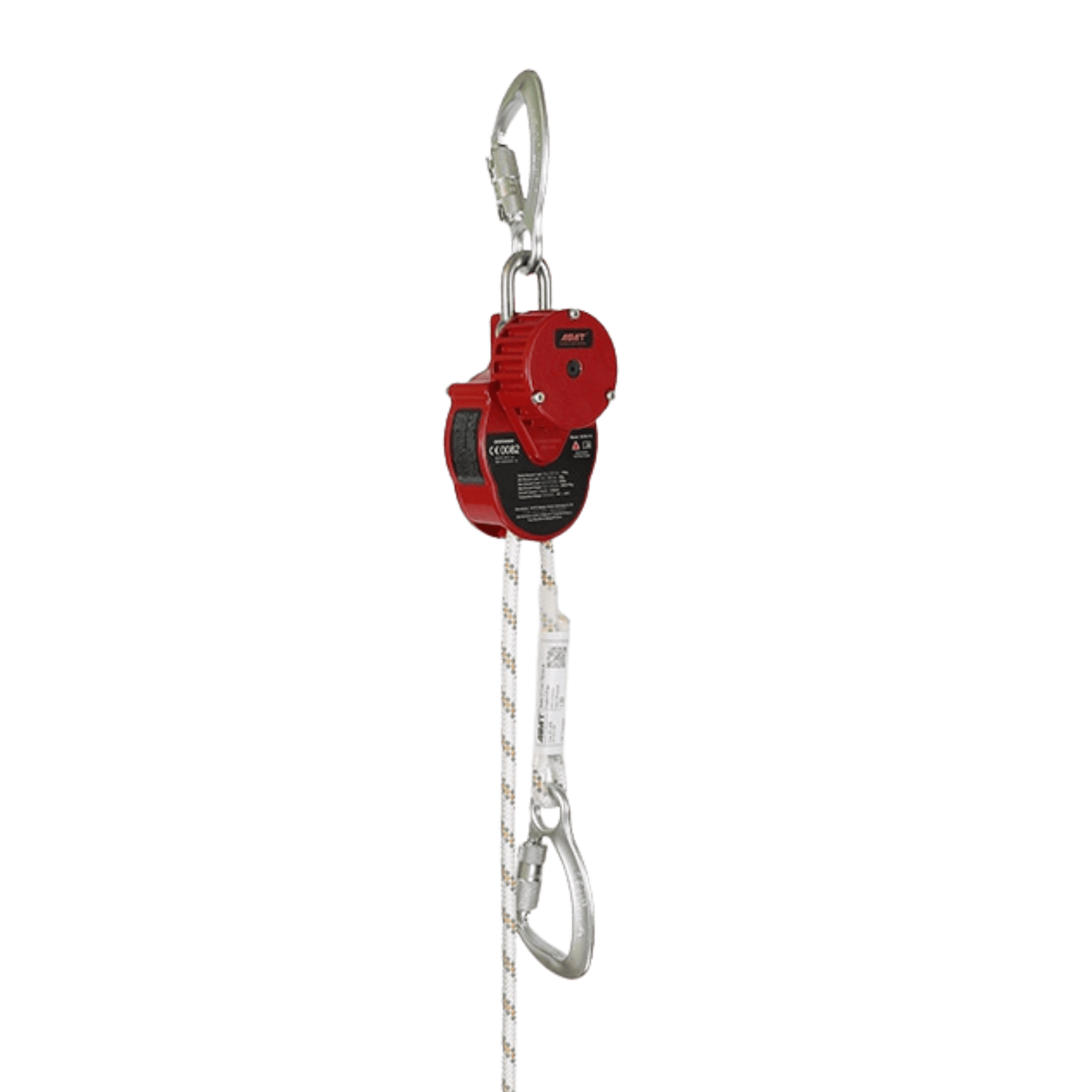
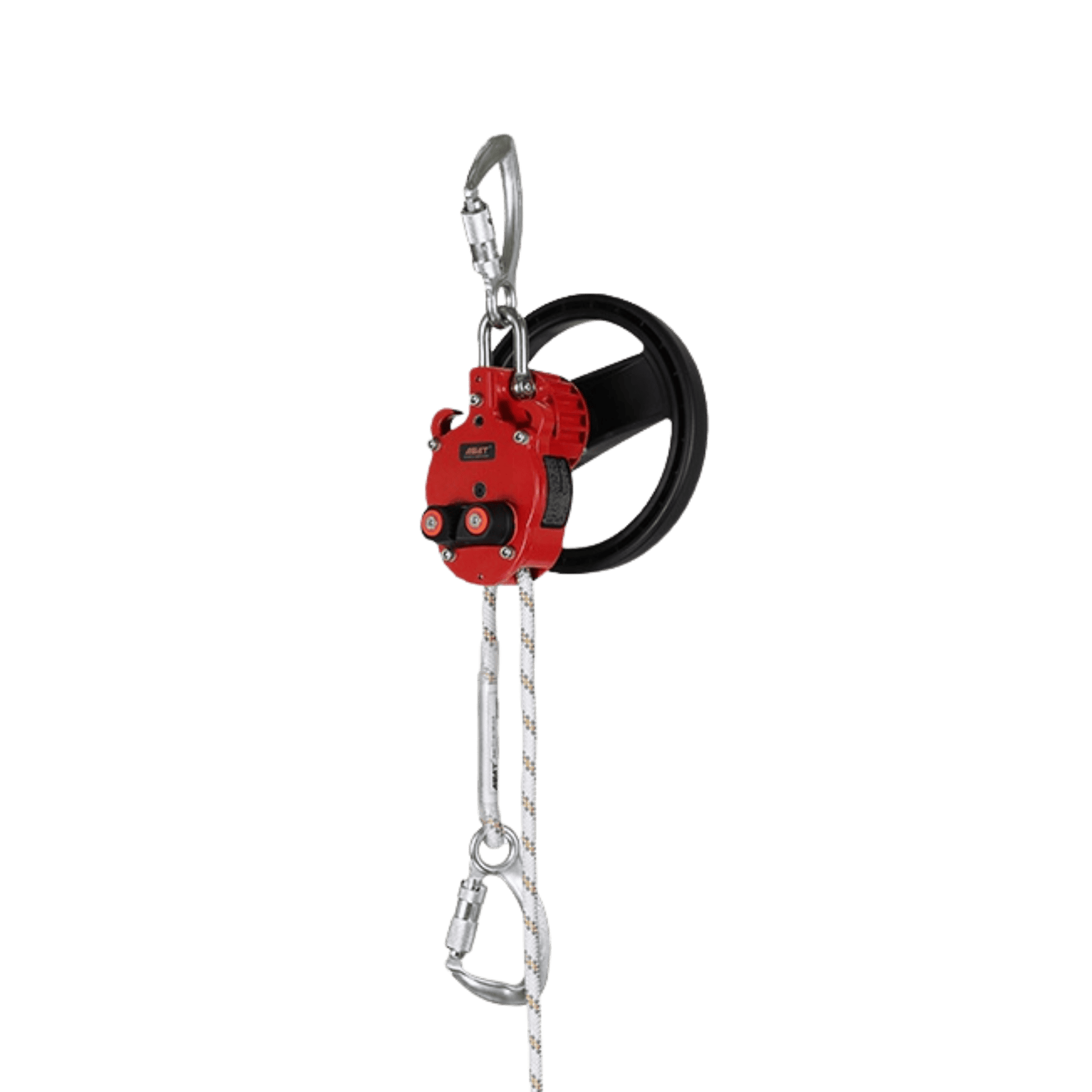
One device for going down, and for pulling someone up
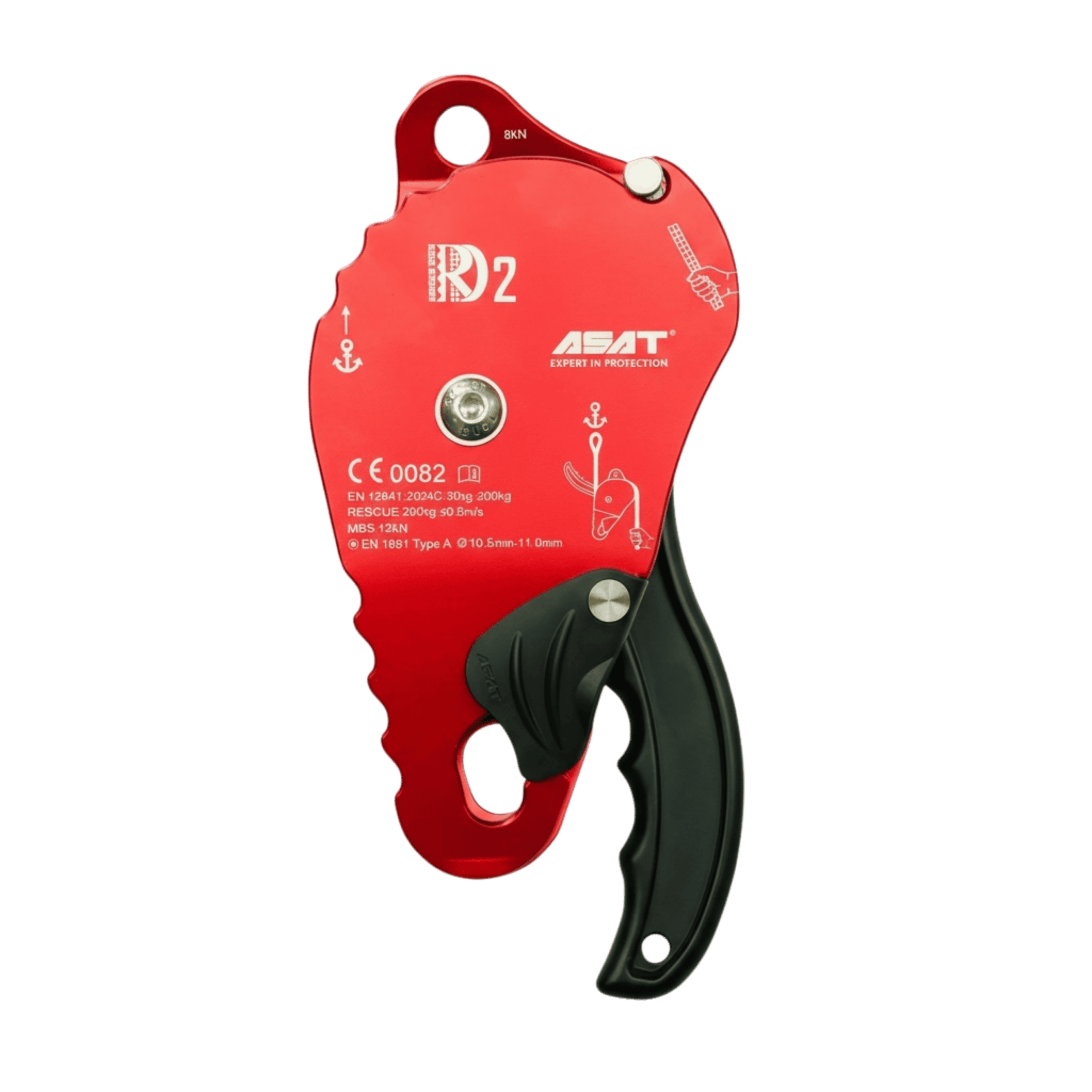
Most descenders do one job. The RD2 does that job — controlled, self-braking descent on a 10.5–11 mm semi-static line — and then does a second one that normally needs a separate piece of hardware.
Built into the side plate is a one-way rotation pulley running up to 85% efficiency on a 1:1 haul. Lower a casualty to a ledge, flip the system, and haul from the same device without unclipping anything or rebuilding the rig.
That is the whole argument for this tool: fewer pieces on the anchor, fewer transitions, less time.
| Hauling Efficiency | Up to 85% on 1:1 |
|---|---|
| Minimum Breaking Strength (MBS) | 12 kN |
| Rescue Load | 250 kg (≤ 0.5 m/s) |
| User Capacity | 30–200 kg |
| Working Load Limit (WLL) | 200 kg |
| Compatible Rope | EN 1891:1998 Type A, ø 10.5–11.0 mm (semi-static kernmantle) |
|---|
| CE Marking (production control) | 0082 |
|---|---|
| Certificate Validity | 9 Jul 2025 – 8 Jul 2030 |
| EU Type-Examination | Cert. No. 1019-247/Q/2025 — Notified Body 1019, VVUÚ a.s. (Czech Republic) |
| Manufacturer-declared | XF 494-2023 |
| PPE Category | III |
| Standards | EN 12841:2024 (Type C), EN 365:2004 |
| Colors | Black, Red |
|---|---|
| Material | Aluminum alloy 6061-T651 (side plates), A380 (handle), 304 stainless steel (V-wheel) |
| Weight | 0.830 kg |
| Brand / Trademark | ASAT |
|---|---|
| Manufacturer | SKYER (Beijing) Industry Technology Co., Ltd. |
| Model | RD2 |
Add the complements you need — each is added on its own.
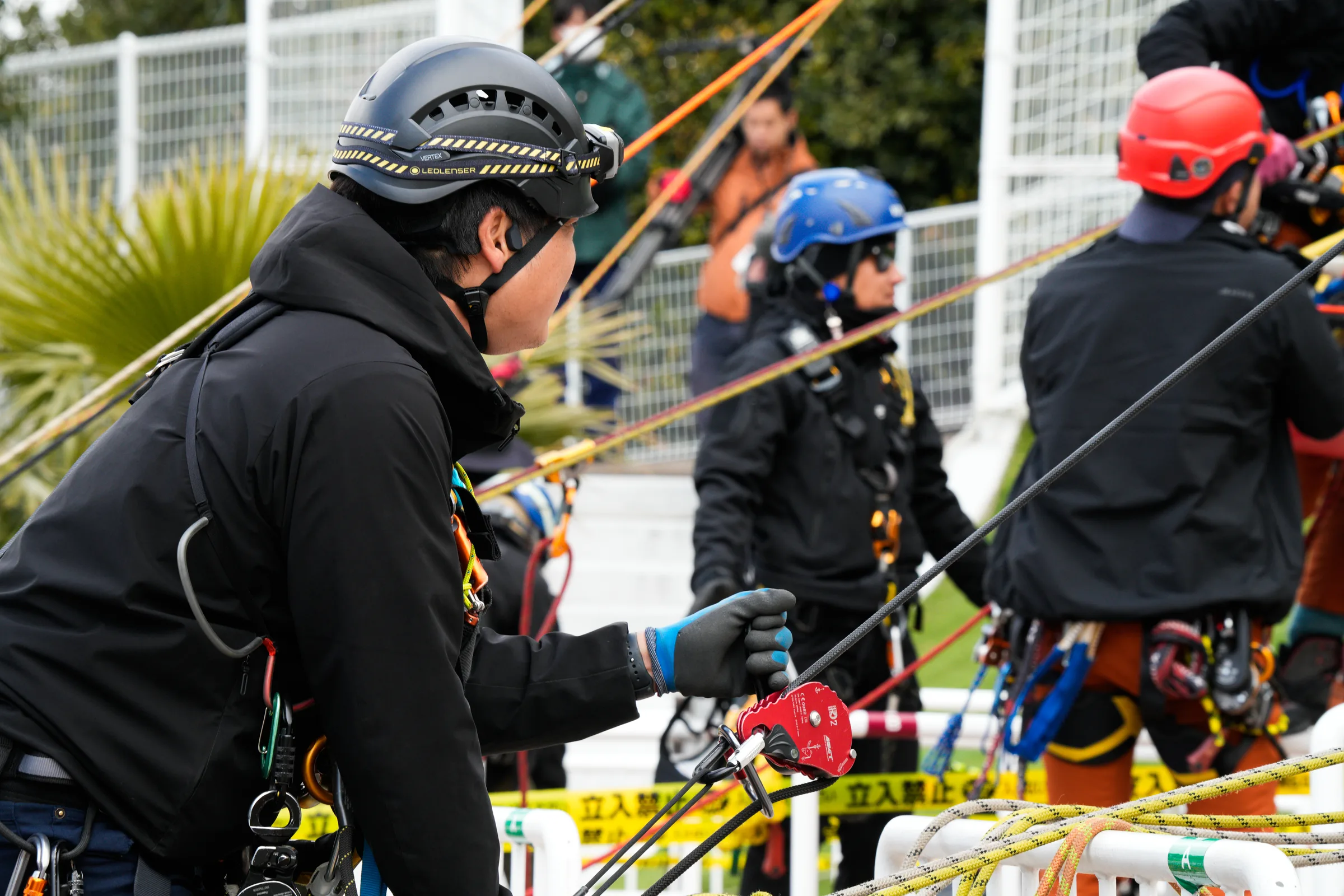
On a 1:1 haul, efficiency is the share of your pull that actually reaches the load. At 85%, pulling 100 kg of load costs you about 118 kg of effort. On a cheap carabiner redirect — which is what many teams end up using — you lose roughly half. Over a 30 m raise with a tired team, that difference is the difference between finishing the raise and not.
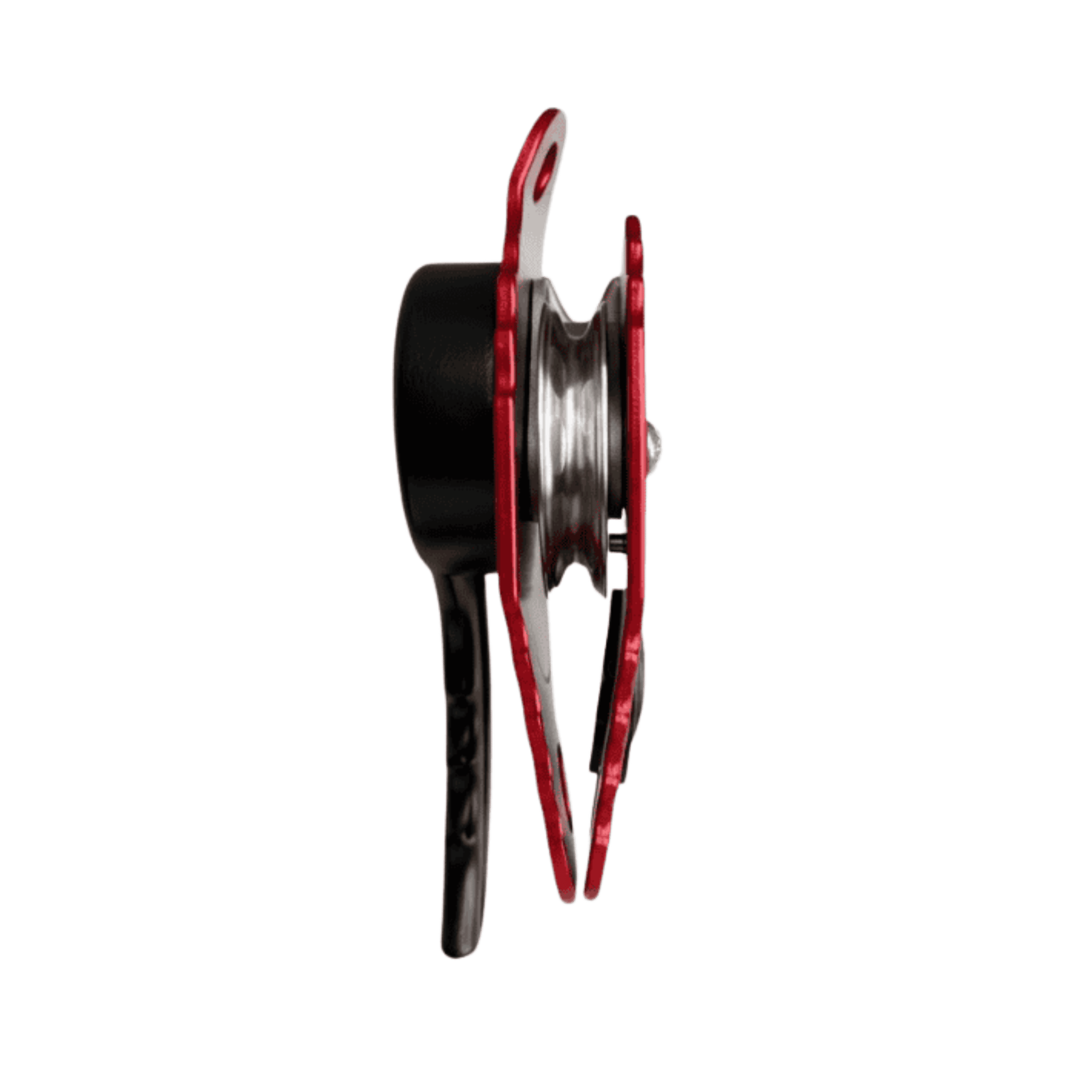
The pulley turns in the hauling direction and locks against the other. That is what lets you ascend smoothly on the device, and it is what holds progress between pulls on a haul — the load does not run back while you reset your grip.
A becket on the body means you can build a real mechanical advantage system — 3:1, 5:1 — off the descender itself, instead of carrying a separate pulley to do it.
The frame is built so the RD2 can serve as a single one-way rotation pulley for a change of direction on a haul, or as a block pulley to add friction on a lowering. One tool, three roles on the anchor.
In a real rescue the slow part is rarely the rope work. It is the transitions — breaking down a lowering system and building a hauling system while someone waits on the end of the line.
The RD2 is designed to shift between the two fast. Lower, stop, haul, lower again, from the same device, on the same anchor.
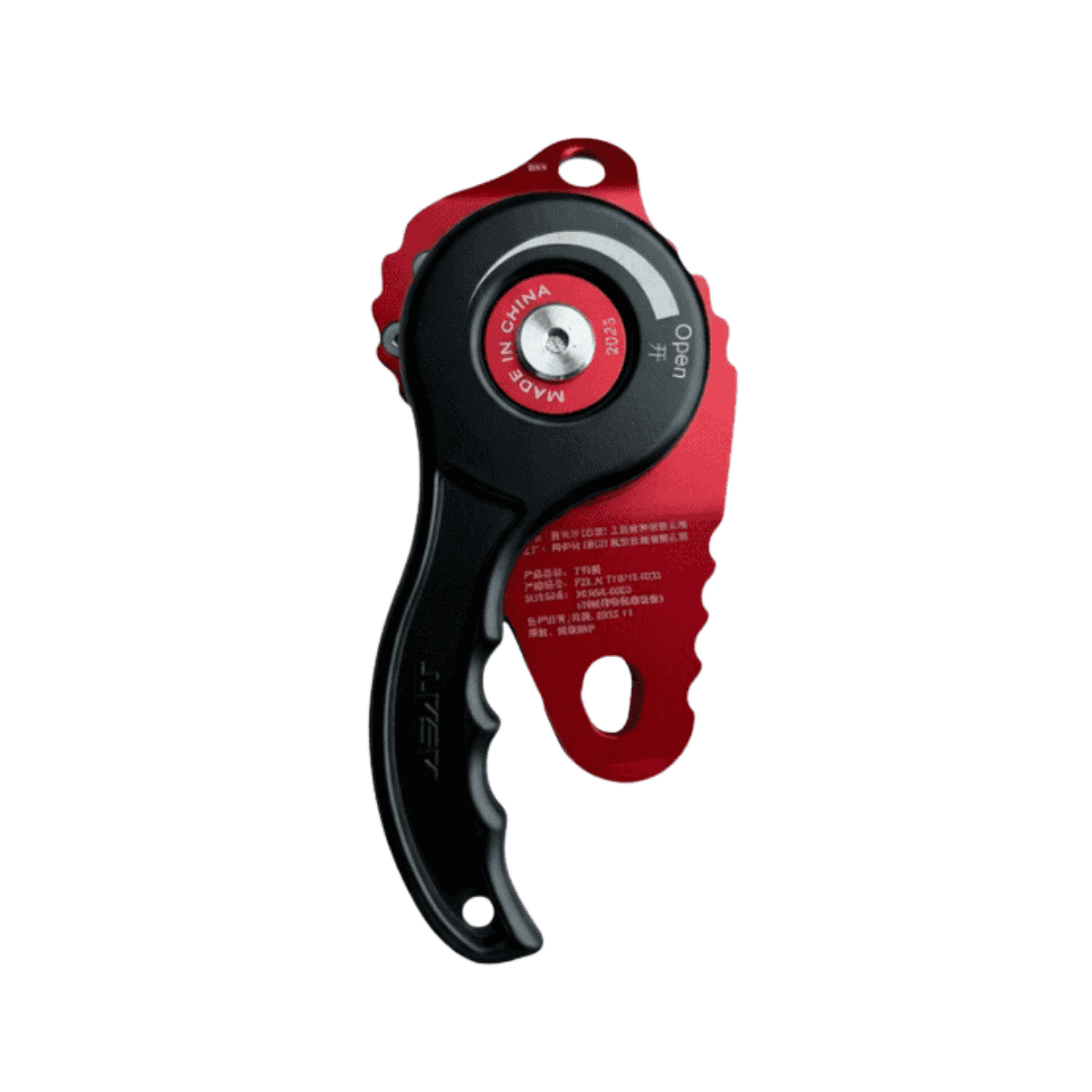
There is a hole in the handle for a remote control cord. You can run the device from a position away from the anchor — useful when the anchor is in a bad spot, or when the person operating it needs eyes on the load instead of on the hardware.
The ergonomic handle is shaped for TTRS work, where two tensioned lines share the load and both devices are operated together.
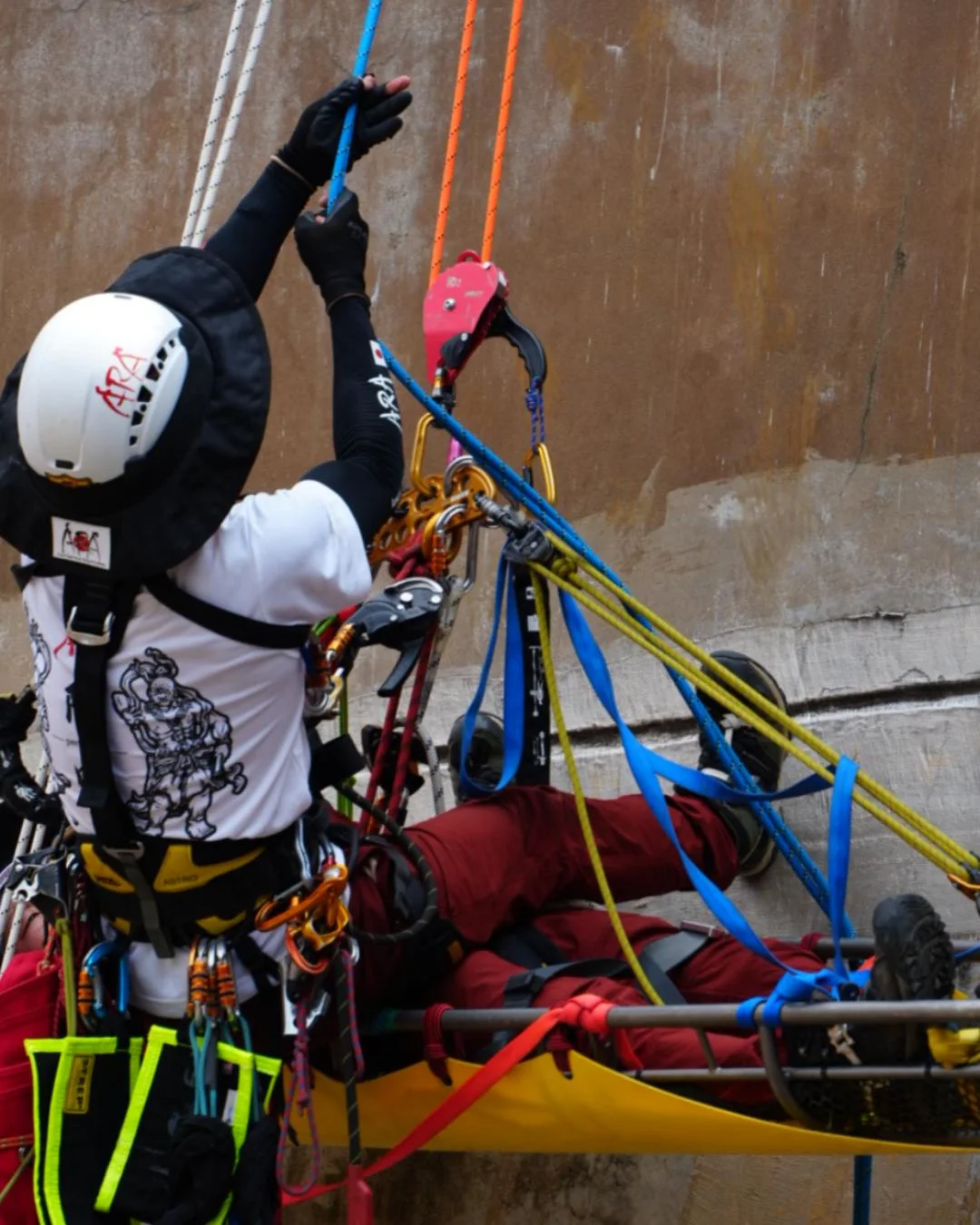
The side plate has a safety gate. You can install or remove the rope without removing the RD2 from your harness or from the anchor.
That sounds like a convenience feature. On a rope it is a safety feature: every time a device comes off the attachment point to be re-threaded, there is a moment where it is in your hand and not on the system — usually while you are hanging, usually with gloves on, often in wind.
Some descenders lock if you pull the handle too far. The RD2 does not have that function, and you should know this before you buy.
What you gain: smooth, uninterrupted lowering on inclined surfaces and with light loads — exactly the situations where an anti-panic mechanism tends to grab and stall you, forcing you to reset the handle repeatedly on a traverse or a low-angle descent.
What it means for you: descent speed is controlled entirely by the angle of the handle, and the device stops the moment you release it. This is a tool for trained, experienced operators. If your team's protocol requires an anti-panic descender, this is not the device for that role — tell us and we will point you to one.
The wear groove — the surface the rope runs over under braking — is hardened steel rather than bare aluminum. That is the part that wears out first on a descender used daily, and it is the reason a device either lasts a season or lasts years.
Two colors: red and black.
Category III is the classification the PPE Regulation reserves for equipment protecting against risks that can cause death or irreversible harm. It is the only category where a notified body must keep auditing production after the design is approved — a one-off test of a sample is not enough.
EN 12841 Type C covers rope adjustment devices used to descend the working line. It does not cover fall arrest.
A Type C device must always be used together with a Type A backup device running on a separate safety line. The RD2 holds you while you work and lowers you under control; it is the backup device on the second line that catches you if the working line fails. Never use the RD2 as your only connection to the structure.
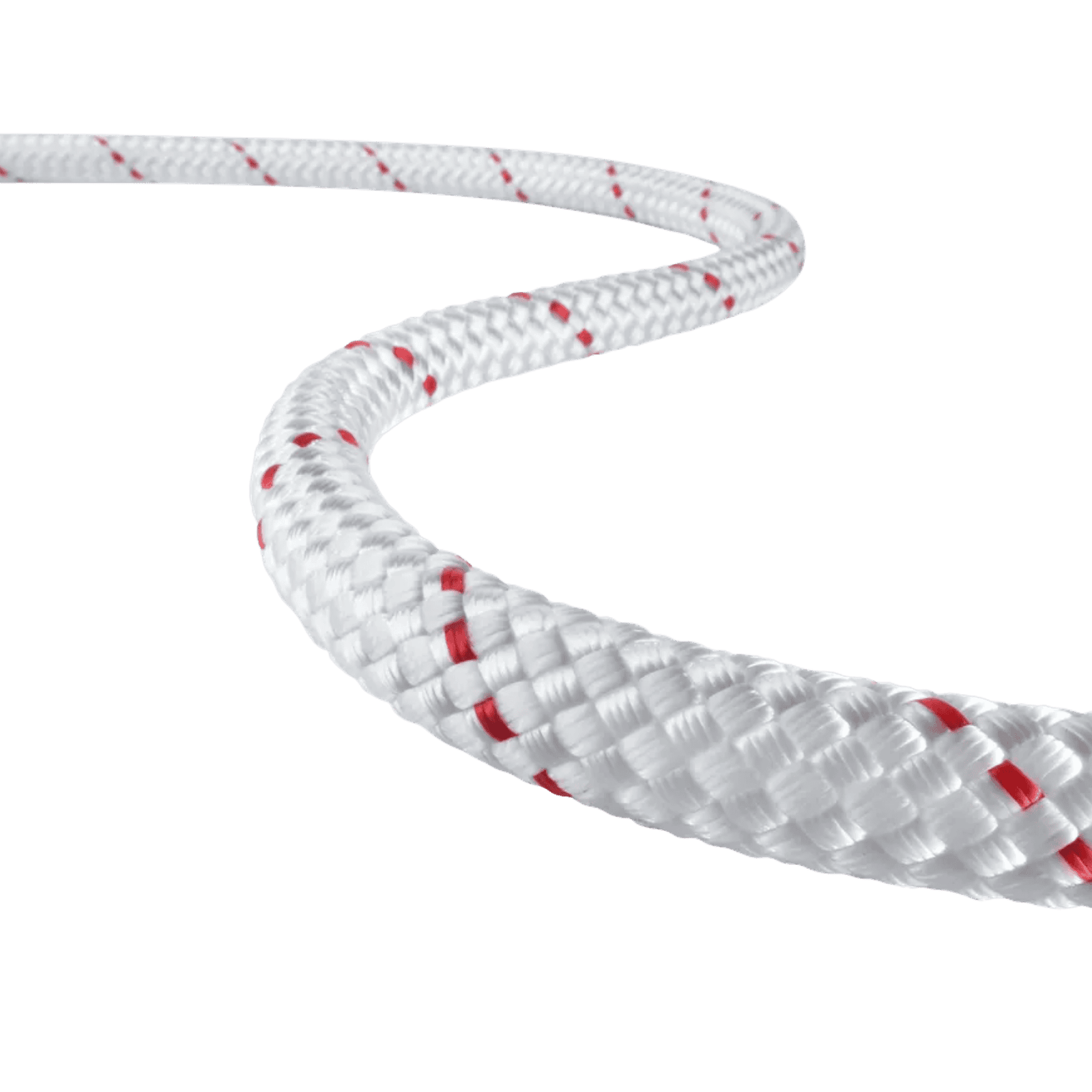
Use it only with EN 1891:1998 Type A semi-static kernmantle rope, 10.5 to 11.0 mm. Dynamic rope, a different diameter or a worn sheath will change how the device brakes, and the certified performance no longer applies.
About the 250 kg. The 250 kg rescue rating is the manufacturer's declared figure for two-person rescue loads, marked on the device and valid only at a controlled speed of 0.5 m/s or less. The EU type-examination certificate states a user capacity of 30–200 kg. We publish both, labeled, so you can see exactly which number carries which authority.
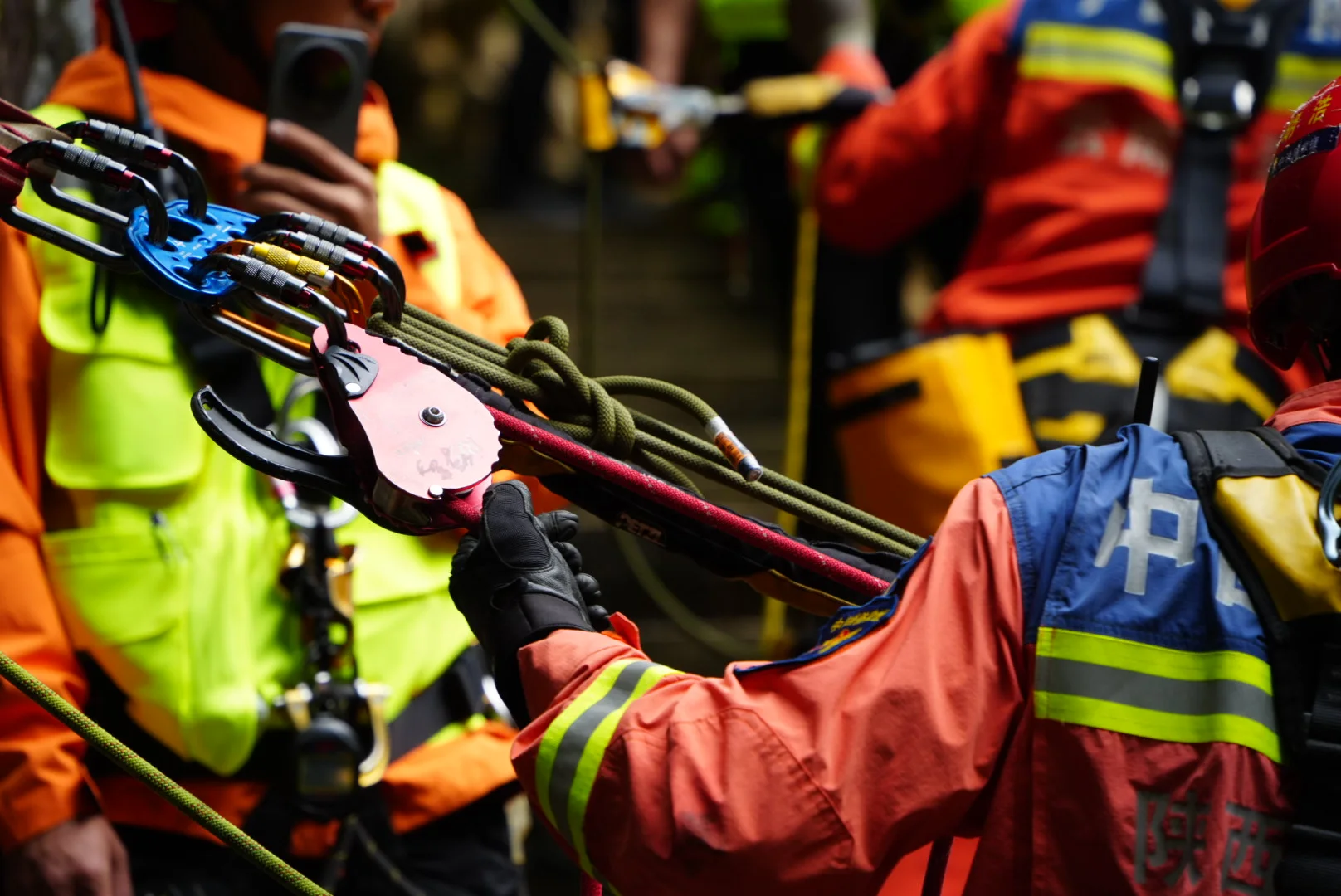
IRATA and SPRAT operators who descend the working line all day and want the haul capability without a second device on the harness.
Technical rescue, confined space and industrial rescue, where the lower-then-raise transition is the part that costs time.
Where anchors are awkward and a remote control cord on the handle earns its place.
Not for: first-time users, recreational use, or any team whose protocol requires an anti-panic descender.
A descender is bought as part of a system — rope, backup device, harness, connectors. If you tell us what you are working on and what you already own, we will tell you whether the RD2 fits, and what it needs alongside it.
And if it is the wrong tool for your job, we will say so.
4 items
 ASAT
 ASAT
 ASAT
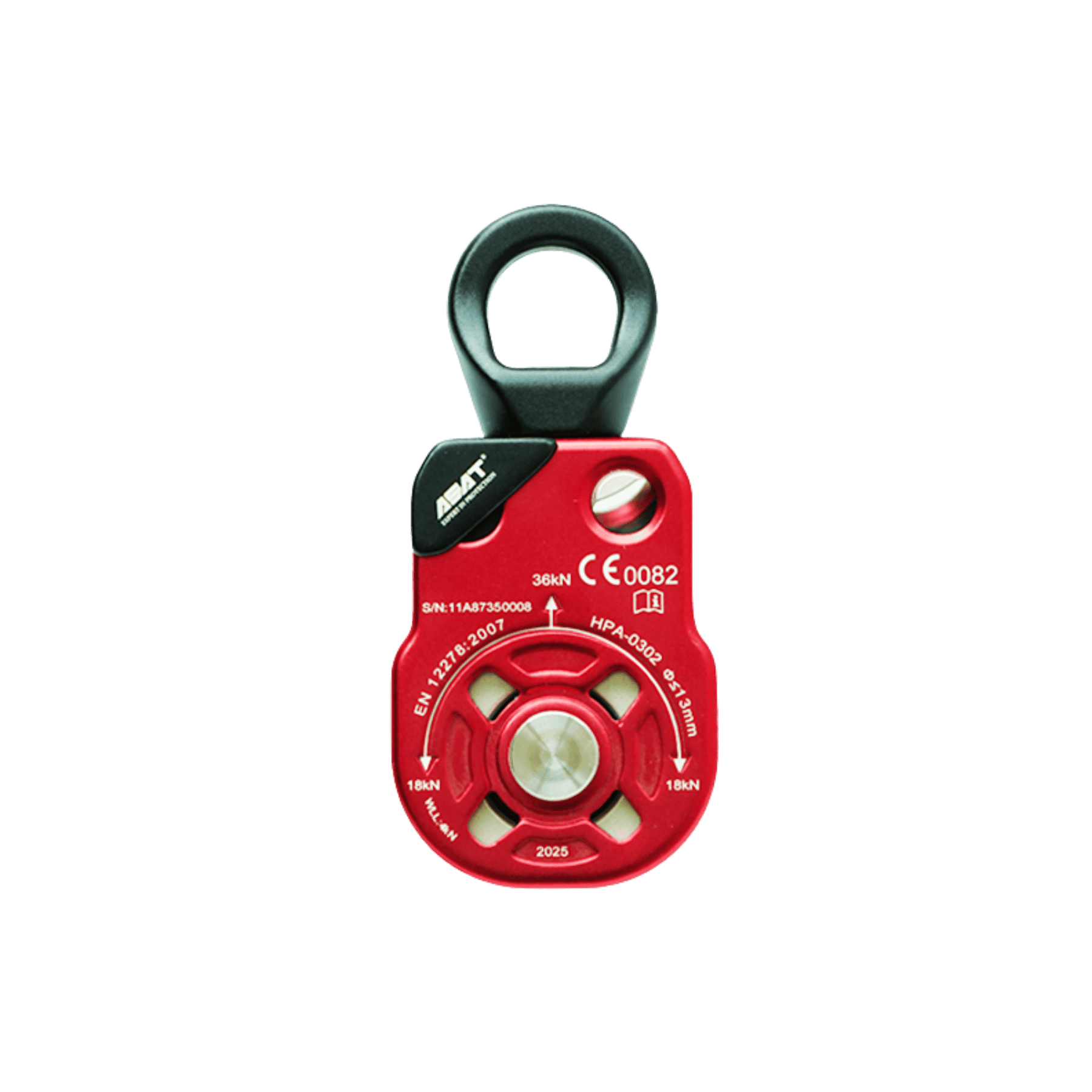
Single-sheave self-aligning swivel pulley (36 kN MBS)
$90 USD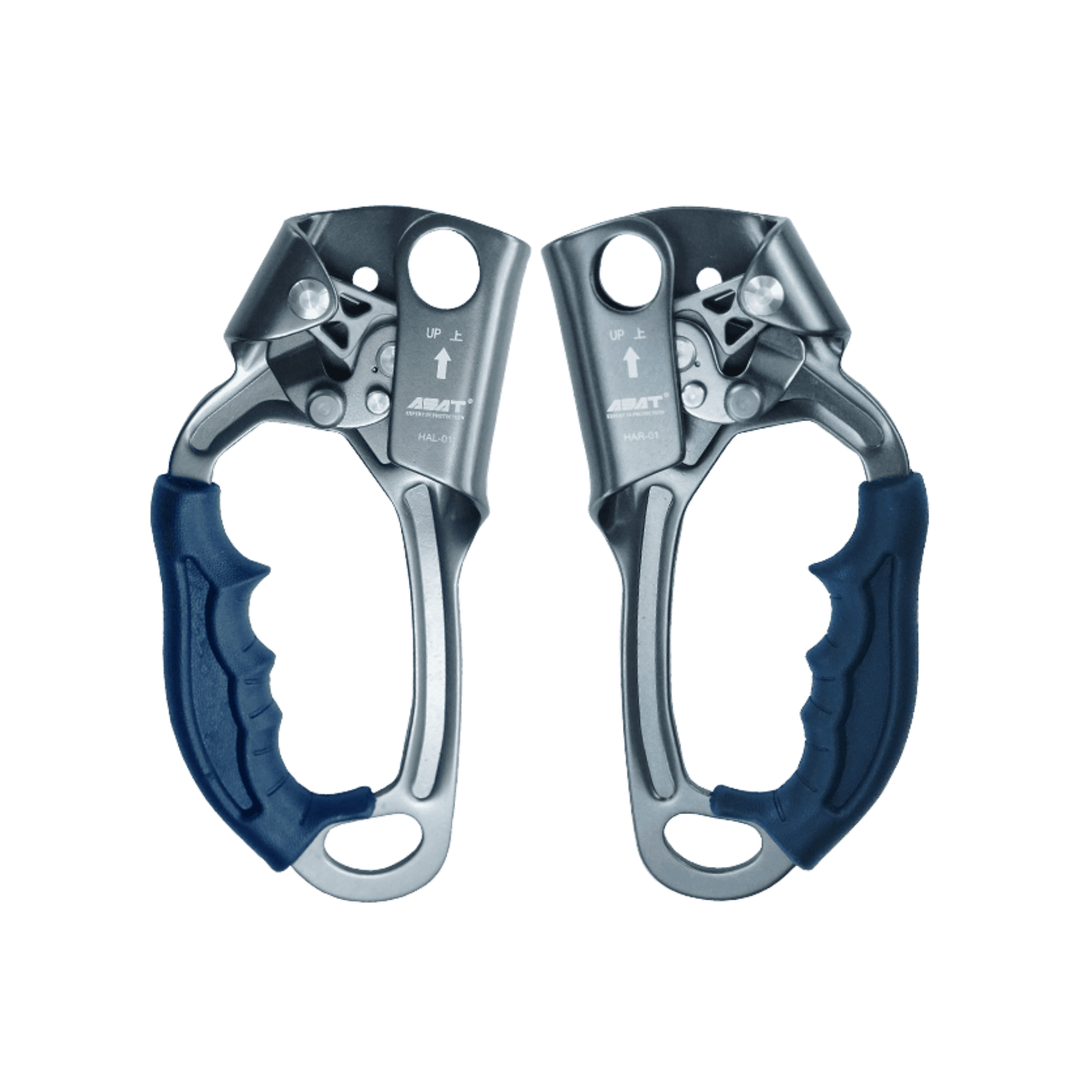 ASAT
Handled rope clamp / hand ascender (EN 567), left or right
$95 USD